 Skip to content
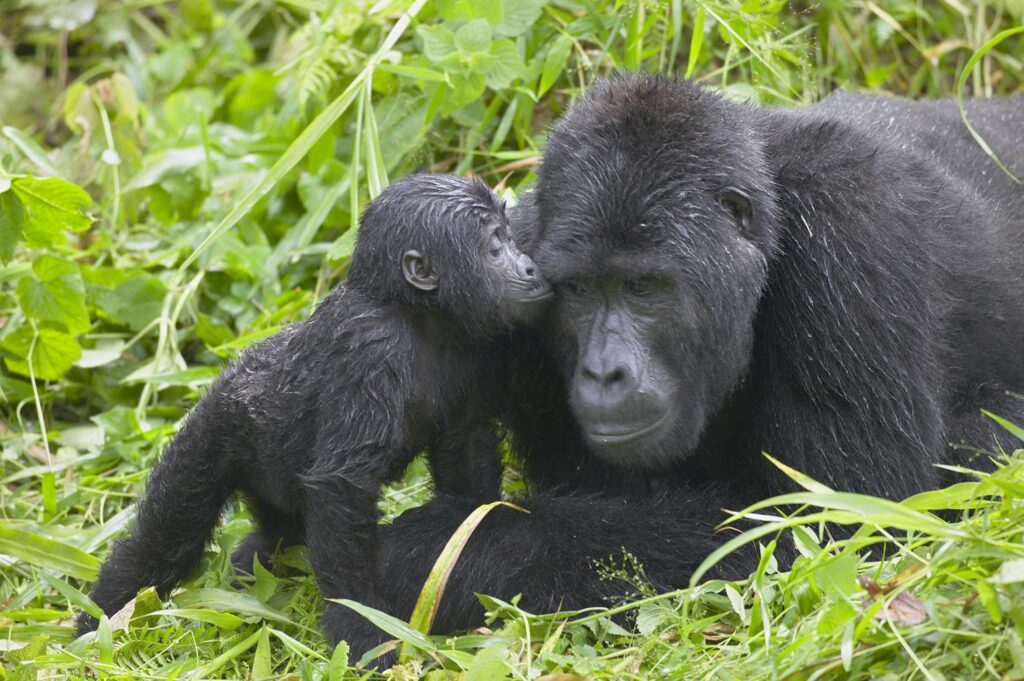
For travelers with limited time, One-Day Gorilla Trekking Rwanda makes this remarkable encounter possible without spending several nights near Volcanoes National Park. You can leave Kigali before sunrise, travel north through Rwanda’s hills, attend the official gorilla trekking briefing, enter the forest with experienced park guides, spend up to one unforgettable hour with a habituated mountain gorilla family and return to Kigali later the same day.
Few wildlife experiences create the same anticipation as walking through the misty forests of Volcanoes National Park and suddenly seeing a mountain gorilla family only a short distance away.
That combination of accessibility and extraordinary wildlife is one reason Rwanda has become one of Africa’s leading gorilla trekking destinations.
Volcanoes National Park lies in northwestern Rwanda in the Virunga Mountains. The park protects steep volcanic slopes, bamboo forest, montane vegetation and habitat for endangered mountain gorillas and golden monkeys. The landscape is dominated by five volcanoes on the Rwandan side of the Virunga Massif: Karisimbi, Bisoke, Sabyinyo, Gahinga and Muhabura.
Unlike some wildlife experiences that require internal flights or a long multi-day journey, Rwanda’s gorilla trekking region can be reached by road from Kigali. That allows travelers staying in the capital to experience gorilla trekking as a full-day excursion.
A one-day trip should not, however, be confused with an easy or short sightseeing tour. The day starts very early. The trek itself is unpredictable. Trails can be steep, muddy and slippery. Gorilla families move naturally through the forest, meaning nobody can know exactly how long you will walk before finding them.
This guide explains the entire experience so that you know exactly what to expect before booking.
Whether you are visiting Rwanda for a conference, combining Kigali with another African destination, passing through the country on a business trip or building gorilla trekking into a larger East African safari, this complete guide will help you decide whether a one-day gorilla trek in Rwanda is right for you.
What Is One-Day Gorilla Trekking Rwanda?
One-Day Gorilla Trekking Rwanda is a same-day safari from Kigali to Volcanoes National Park that allows travelers to participate in the official mountain gorilla trekking experience and return to Kigali without staying overnight near the park.
The day normally begins between approximately 4:00 a.m. and 4:30 a.m., depending on your pickup location and operational arrangements.
Your private driver-guide collects you from your Kigali hotel, residence or agreed pickup point and drives north toward Musanze and Kinigi.
The road journey normally takes roughly two and a half hours, although traffic, weather, fog and your exact starting point can affect the timing. Visit Rwanda material similarly places the road transfer between Kigali and Volcanoes National Park at approximately two and a half hours.
Arriving early is essential because gorilla trekking is not an activity you can simply begin whenever you arrive.
Trekkers report to the park headquarters in Kinigi for registration, allocation and a mandatory briefing before heading toward their respective trekking starting points.
After the briefing, travelers are separated into groups and allocated to habituated gorilla families.
You then continue, normally by vehicle, to the appropriate trailhead before entering the forest on foot with park rangers and trackers.
The trekking portion can vary dramatically.
On some days a gorilla family may be relatively close to the starting point. On others the gorillas may have moved deeper into the mountains, requiring several hours of walking through forest and mountainous terrain.
Once your assigned family is located, the highlight of the entire journey begins.
You are allowed to spend up to one hour observing the gorillas.
Afterward, you trek back out of the forest, meet your driver-guide, have lunch or refreshments depending on your safari arrangement, and drive back to Kigali.
That is why a one-day Rwanda gorilla safari is entirely possible but still feels like a major expedition rather than an ordinary day tour.
Why Rwanda Is Ideal for a One-Day Gorilla Trek
The geography of Rwanda makes this itinerary practical.
Many travelers arrive through Kigali International Airport, stay in Kigali and can travel overland toward the Volcanoes region without needing another flight.
Rwanda is also compact compared with many African safari destinations.
Volcanoes National Park is situated in the northwest of the country, near Musanze and the Virunga Mountains. Although visitors need an early start, the drive remains manageable enough for a same-day journey.
This creates an important advantage for travelers who have very limited time.
Someone attending a conference in Kigali, for example, might have only one free day before continuing to another country.
Another traveler may be connecting a Rwanda gorilla trek with a safari in Kenya, Tanzania, Uganda or another African destination.
Others simply prefer to keep their accommodation in Kigali rather than changing hotels for one night.
For these travelers, gorilla trekking from Kigali can provide a practical solution.
You leave the city in darkness, experience one of Africa’s most extraordinary wildlife encounters and return after the trek.
The route itself is also attractive.
As daylight develops, the journey reveals Rwanda’s rolling hills, cultivated landscapes, villages and increasingly dramatic views toward the Virunga region.
By the time you approach Musanze and Kinigi, the volcanic peaks dominate the horizon whenever weather conditions allow.
The transition from Kigali’s urban environment to the cool mountain landscape forms part of the experience.
Where Does Gorilla Trekking Take Place in Rwanda?
All regular mountain gorilla trekking tourism in Rwanda takes place inside Volcanoes National Park.
The park occupies the northwestern corner of the country and forms part of the larger Virunga conservation landscape extending across Rwanda, Uganda and the Democratic Republic of Congo.
Volcanoes National Park protects Rwanda’s portion of the Virunga Massif.
The terrain includes bamboo forest, evergreen forest, grassland, swamp and high-altitude vegetation. Visit Rwanda describes the park as habitat for endangered mountain gorillas and highlights its five major Virunga volcanoes: Karisimbi, Bisoke, Sabyinyo, Gahinga and Muhabura.
The town most visitors associate with the region is Musanze, historically known as Ruhengeri.
However, the official park headquarters and the central reporting point for gorilla trekking are at Kinigi, outside Musanze and closer to the park boundary.
This distinction matters when planning your morning.
Reaching Musanze does not mean you have reached your trekking registration point.
Your operator therefore plans the journey around your required arrival at Kinigi rather than simply estimating the time to Musanze town.
From Kinigi, different gorilla trekking groups continue to different trailheads depending on which gorilla family they have been allocated.
Some trailheads are relatively close.
Others require additional driving before the trek begins.
That is another reason why travelers should avoid making rigid assumptions about exactly when the forest walk will begin or end.
One-Day Gorilla Trekking Rwanda Permit Cost
The gorilla permit is the most important component of any Rwanda gorilla safari.
As of September 2026, Visit Rwanda lists the standard mountain gorilla trekking permit at US$1,500 per person per day. The official information also states that the minimum age for gorilla trekking is 15 years.
For most international visitors, therefore, the largest part of the overall cost of One-Day Gorilla Trekking Rwanda is the permit itself.
The permit should not be confused with your transportation or tour service price.
Depending on how a tour is advertised, an operator may quote either a complete package including the permit or a service price to which the US$1,500 permit must be added.
Always check exactly what your quotation includes before comparing different offers.
A properly organized one-day gorilla safari commonly combines the gorilla permit with private transportation, fuel, a professional driver-guide, Kigali pickup and drop-off, drinking water and lunch or refreshments.
Some packages may include additional services.
Others advertise only transportation and guiding while showing the permit separately.
Neither pricing structure is necessarily wrong. What matters is understanding the total amount required to complete the trip.
Eligible Rwandan nationals, East African Community citizens, African citizens and certain categories of residents may qualify for special permit rates under current Visit Rwanda offers, subject to the applicable identification, residence requirements and terms. Travelers who believe they qualify should have their documentation checked before assuming that a discounted rate applies.
Permit policies and promotional categories can change, so current availability and eligibility should always be confirmed for your actual trekking date.
Why You Should Book Your Rwanda Gorilla Permit Early
Gorilla trekking is carefully controlled.
It is not comparable to buying entry to a large attraction where unlimited visitors can arrive throughout the day.
Only a limited number of people can visit habituated mountain gorilla families each day.
Because capacity is restricted, popular trekking dates can become unavailable.
The official Visit Rwanda website recommends booking in advance and provides the option of booking directly or arranging the experience through tour operators.
For international travelers, arranging the permit through an experienced Rwanda tour operator can simplify the process because the operator can coordinate permit availability with your transport, accommodation and wider itinerary.
This is particularly important for a one-day tour.
The entire itinerary depends on having a confirmed permit for a specific date.
You should therefore avoid booking non-refundable flights and making complicated travel arrangements around gorilla trekking until permit availability has been checked.
Peak travel periods deserve particular attention.
June through September is popular because conditions are generally drier, while Christmas, New Year and other holiday periods can also attract strong demand.
Travelers with fixed international flights have much less flexibility than visitors who can shift their trek by several days.
The earlier you begin planning, the easier it becomes to secure your preferred date.
Can You Really Trek Gorillas From Kigali and Return the Same Day?
Yes.
A genuine one-day gorilla trek from Kigali is possible, and this is one of the major advantages of trekking in Rwanda.
The schedule works because the road distance between Kigali and the Volcanoes region can be covered before the park briefing when you leave early enough.
A realistic outline begins with collection from Kigali before dawn.
You drive toward Kinigi, arrive for park registration and briefing, complete the trek, return from the forest and drive back to the capital.
What travelers should understand is that the return time cannot be guaranteed precisely.
Mountain gorillas are wild animals moving naturally through a large forest environment.
Nobody knows exactly where your allocated gorilla family will be when the trek starts.
A short trek can put you back at the trailhead relatively early.
A long trek may keep you in the forest well into the afternoon.
Weather, road conditions, the pace of your trekking group and where the gorillas have moved all influence the day.
Therefore, although a Kigali-to-Kigali gorilla trek works well, it should not be planned like a tightly timed airport transfer.
Allow the entire day.
A Realistic One-Day Gorilla Trekking Rwanda Itinerary
Your adventure begins in Kigali before sunrise.
For many guests, pickup takes place at approximately 4:00 a.m. to 4:30 a.m.
Your exact departure time depends on your hotel location, current park reporting arrangements, road conditions and the logistics established by your tour operator.
Your driver-guide meets you at your hotel and begins the journey north.
Because breakfast service at many hotels may not have started, travelers often arrange an early packed breakfast the evening before.
Leaving Kigali early also helps avoid unnecessary traffic.
As dawn approaches, Rwanda’s landscape gradually becomes visible.
The journey passes through hilly countryside toward Musanze and the foothills of the Virunga volcanoes.
Arrival at Volcanoes National Park Headquarters
You arrive in the Kinigi area early in the morning.
The atmosphere at park headquarters is often one of anticipation as travelers from different parts of the world prepare for their treks.
Your permit documentation is processed and park staff organize visitors into trekking groups.
Before entering the forest, you attend a briefing explaining gorilla behavior, trekking procedures and the rules designed to protect both visitors and the animals.
Family allocation also takes place as part of the morning process.
Factors such as your physical ability, age and preference may be communicated to park staff.
However, visitors should remember that the final allocation is handled by the park authorities and depends on daily circumstances.
After the briefing, you meet the guides associated with your trekking group.
You then drive toward the relevant starting point.
Beginning the Gorilla Trek
The walk starts from the trailhead.
Depending on the route, the first section may pass through farmland or communities bordering the park before reaching denser vegetation.
Once inside the forest environment, conditions can change quickly.
The ground may be uneven.
Vegetation can be thick.
Rain can make the trail muddy.
There may be steep climbs or slippery descents.
Your ranger guides lead the group while trackers help determine the current location of the gorilla family.
Nobody should assume that gorilla trekking means following a perfectly constructed hiking trail.
Part of the experience is moving through genuine mountain forest.
This is why suitable footwear and clothing matter so much.
The Moment You Find the Mountain Gorillas
Eventually, communication between your ranger team and trackers indicates that your gorilla family is close.
Excitement rises quickly.
You may be asked to leave walking sticks or certain belongings behind before approaching.
Voices become quieter.
Cameras come out.
Then the vegetation opens and, sometimes almost without warning, the first gorilla becomes visible.
It may be a silverback resting among leaves.
It may be a mother feeding while an infant remains close.
Young gorillas may climb, tumble or play nearby.
Other family members may be feeding quietly in thick vegetation.
This is the moment travelers have crossed the world to experience.
The park allows a maximum encounter of approximately one hour with the gorillas.
An hour may sound short while planning the safari.
In the forest, however, it feels intensely concentrated.
There is little need for artificial entertainment.
Watching a silverback change position, seeing a juvenile climb a branch or observing the interactions between mothers and infants creates more than enough activity.
Your ranger guides also help interpret behavior and manage the group’s position.
Returning From the Forest
When your permitted viewing time ends, the group leaves the gorillas and begins walking back.
Depending on the terrain, the return journey may feel easier or more demanding than the approach.
If your trek involved substantial climbing, descending muddy mountain terrain requires patience.
Once you reach the trailhead, your driver-guide will be waiting.
After changing footwear or cleaning up as necessary, you continue for lunch and refreshments according to your itinerary.
Then the drive back to Kigali begins.
Arrival time depends largely on how long the gorilla trek took.
For that reason, travelers should keep their evening flexible.
How Difficult Is Gorilla Trekking in Rwanda?
This is one of the most important questions to answer honestly.
There is no single difficulty level for gorilla trekking.
One person may walk for less than two hours before returning from the forest.
Another may spend several hours navigating steep, muddy terrain.
The gorillas determine much of the difficulty because they move throughout their habitat.
Weather matters as well.
Even a relatively short trek can feel challenging after heavy rain if the ground becomes slippery.
Elevation is another consideration.
The Virunga landscape sits considerably higher than Kigali, and some visitors notice that climbing feels more demanding at altitude.
You do not need to be a professional athlete.
Many travelers of different ages successfully complete gorilla treks.
However, reasonable mobility and the ability to walk on uneven terrain are valuable.
Preparation matters more than many visitors expect.
Walking regularly before your safari, using stairs and spending time on moderate hills can improve your comfort.
It is also sensible to wear your hiking shoes before traveling rather than arriving with brand-new boots that you have never tested.
Can Older Travelers Do One-Day Gorilla Trekking Rwanda?
Yes, many older travelers successfully trek mountain gorillas in Rwanda.
Age alone should not automatically prevent somebody from considering the experience.
Physical mobility, balance, stamina and individual health circumstances matter more.
The important step is communicating honestly with your tour operator before trekking day.
If a traveler requires a shorter or less demanding route, the operator can communicate that preference during the allocation process.
Park officials normally consider guest circumstances when organizing trekking groups, although nobody can guarantee that a particular gorilla family will remain close to the trailhead.
Gorillas move.
Today’s easier group can be tomorrow’s more demanding trek.
Hiring a porter is also extremely helpful.
Even if you are physically fit, a porter can carry your backpack, water and equipment and assist on difficult sections.
For older travelers or people with limited mobility, that additional support can make a significant difference.
Travelers with significant medical concerns should speak with their doctor before undertaking strenuous trekking.
A gorilla safari should be memorable because of the wildlife, not because someone felt pressured to attempt terrain beyond their capabilities.
Gorilla Trekking for Travelers With Knee or Mobility Concerns
Visitors with previous knee surgery, reduced mobility or difficulty descending steep ground should discuss this before booking.
Descending can sometimes be more uncomfortable than climbing.
Mud, roots, rocks and uneven ground require stability.
Trekking poles or walking sticks can help, while strong hiking boots improve grip.
A porter provides another human point of support and can make difficult sections more manageable.
Your tour operator should also notify the park team about mobility concerns during the morning allocation.
It is important, however, to maintain realistic expectations.
No operator can promise a perfectly flat gorilla trek.
This is a natural mountain environment.
The goal should therefore be to improve your chances of receiving a suitable allocation and provide appropriate support rather than promising conditions that nobody can control.
Gorilla Trekking Age Limit in Rwanda
The minimum age for Rwanda gorilla trekking is 15 years.
Visit Rwanda states this clearly in its official gorilla tracking information.
Families traveling with younger children therefore need to plan alternative activities for them while adults or eligible teenagers participate in the trek.
This requirement also means passport details are important during the permit booking process.
Do not assume that a child who is physically strong enough to hike will automatically be allowed to participate if they are below the official age threshold.
What Happens During the Gorilla Trekking Briefing?
The briefing is a fundamental part of the experience.
It introduces trekkers to the behavior expected around the gorillas and explains procedures for entering their habitat responsibly.
You will learn how to position yourself, how to respond if a gorilla approaches, why noise should be kept low and why visitors must follow the ranger’s instructions.
The briefing also reinforces health and conservation measures.
Mountain gorillas are genetically close to humans and can be vulnerable to diseases transmitted by people.
That is why visitors who are ill should inform the relevant guides and authorities rather than hiding symptoms simply because they have paid for an expensive safari.
The rules exist primarily to protect the gorillas.
Tourism is allowed only within a controlled conservation framework.
Respecting that framework is part of the privilege of entering their habitat.
How Long Do You Spend With the Gorillas?
Standard gorilla trekking allows visitors to spend up to one hour with the assigned habituated gorilla family once the animals have been located.
That hour is separate from the time you spend hiking.
Your trek might require hours of walking before the gorilla encounter begins.
The one-hour rule helps control disturbance and exposure while still providing visitors with meaningful observation time.
Official and established trekking guidelines also limit group size and visitor behavior around gorillas.
During your hour, avoid becoming obsessed with taking hundreds of photographs.
Take your photographs, but also give yourself time to put the camera down.
Watch how family members interact.
Listen to feeding sounds and vocalizations.
Notice the silverback’s size.
Observe how juveniles play and how mothers position themselves around younger gorillas.
Those quieter observations often become the strongest memories.
How Close Can You Get to Mountain Gorillas?
Visitors are instructed to maintain the distance specified by park guides.
Published gorilla trekking guidance commonly states approximately seven metres as the minimum visitor distance, while guides manage real-life situations when gorillas themselves move closer.
The important distinction is that visitors must not deliberately approach or touch the gorillas.
The gorillas, however, are wild animals.
They may choose to move.
If one approaches your group, remain calm and follow the ranger’s instructions.
Do not reach out simply because a gorilla comes close enough to touch.
This is not a petting experience.
The animals are habituated to controlled human presence, but they remain wild mountain gorillas.
Gorilla Trekking Rules Every Visitor Should Know
The central principle is simple: follow your ranger.
Keep your voice low, remain with your group and do not attempt to separate yourself for a better photograph.
Do not touch the gorillas.
Avoid eating, smoking or drinking near them.
Flash photography is not permitted.
Do not leave litter in the forest.
If a gorilla moves toward you, remain calm and follow the instructions given by the ranger rather than making sudden movements.
The standard viewing period is limited to one hour.
Visitors should also avoid trekking when suffering from a contagious illness because protecting gorillas from human disease is an important part of the conservation system.
These rules are not there to reduce enjoyment.
They make sustainable gorilla tourism possible.
What Should You Wear for Gorilla Trekking in Rwanda?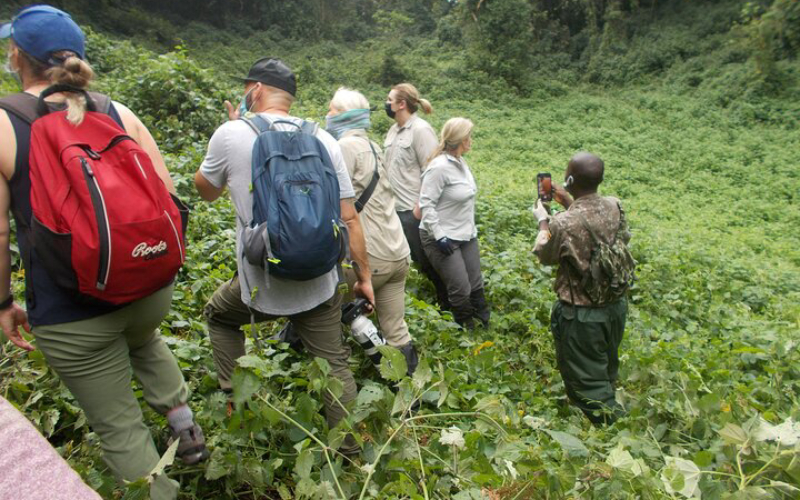
Clothing can determine whether your trek feels adventurous or unnecessarily uncomfortable.
Volcanoes National Park is cool, green and wet.
Even during drier months, rain remains possible.
Official Visit Rwanda guidance recommends solid walking shoes, gaiters, sturdy clothing, gloves and a lightweight waterproof jacket.
Strong hiking boots with good grip are one of the most important items.
Trails may be muddy and slippery.
Long trousers protect your legs from vegetation, insects and mud.
Many experienced trekkers tuck trousers into long socks or use gaiters to stop insects, soil and vegetation from entering their boots.
A long-sleeved shirt gives additional protection from branches and stinging plants.
Gardening or hiking gloves are surprisingly useful.
You may instinctively grab vegetation for balance on a steep or muddy section.
Gloves protect your hands while giving you more confidence.
A lightweight waterproof jacket should be easy to access.
You do not want it buried beneath everything else in your backpack when rain begins.
The goal is not to dress fashionably.
Dress for wet vegetation, mud, altitude and movement.
What Should You Carry on a One-Day Gorilla Trek?
Travel light.
A heavy backpack becomes increasingly annoying after several hours on uneven ground.
Carry drinking water, basic personal essentials, a waterproof layer, your camera equipment and any medication you require.
A small daypack is usually sufficient.
Protect electronics against rain even if the weather looks clear in the morning.
A waterproof cover or sealed inner bag provides useful protection for cameras, phones, passports and documents.
If you have expensive photographic equipment, consider how much weight you genuinely want to carry through the forest.
A professional camera with a useful lens can produce extraordinary photographs, but carrying several heavy lenses may reduce your enjoyment unless a porter carries your equipment.
Should You Hire a Porter?
For most visitors, yes.
A porter is one of the simplest ways to make gorilla trekking more comfortable.
Porters can carry your backpack, water and photographic equipment while also helping on difficult terrain.
This allows you to concentrate on walking safely.
Hiring a porter also creates direct economic value for people living near the protected area.
Even strong hikers often finish the trek saying they were glad they used one.
The cost is small compared with the overall price of the safari, yet the practical benefit can be significant.
For older travelers, guests carrying camera equipment or anyone concerned about steep ground, porter assistance is particularly worthwhile.
Best Time for One-Day Gorilla Trekking Rwanda
Gorilla trekking operates throughout the year.
There is no single month in which the gorillas suddenly become available and another in which they disappear.
The main seasonal difference involves trekking conditions rather than whether mountain gorillas exist in the park.
Rwanda’s primary dry period runs from June to mid-September. Visit Rwanda notes that roads and paths generally become easier to navigate during this period. The country also experiences rainy seasons from around mid-February to May and mid-September to mid-December.
For that reason, June, July, August and early September are popular months for gorilla trekking.
Drier trails can make walking easier.
However, these months may also attract stronger tourism demand, so permit planning becomes important.
Rainy periods should not automatically be avoided.
The forest is exceptionally green, and visitor numbers may feel different from peak periods.
Travelers must simply prepare for wetter and potentially muddier conditions.
Remember that Volcanoes National Park is a mountain rainforest environment.
Rain can occur even during relatively dry periods.
There is no month in which a waterproof jacket becomes unnecessary.
Gorilla Trekking Rwanda During the Rainy Season
Rain changes the character of the trek.
Trails may become slippery.
Mud can slow the group.
Vegetation becomes wet and water may continue dripping long after rainfall ends.
However, gorilla trekking continues.
The experience can still be outstanding.
The difference comes down to preparation.
Quality boots, gaiters, gloves, a rain jacket and a positive attitude matter more.
Travelers who dislike mud or have balance problems may prefer the drier months, although weather can never be guaranteed.
Those who are comfortable with outdoor adventure may find rainy-season trekking atmospheric and memorable.
Is One Day Enough for Gorilla Trekking in Rwanda?
One day is enough to complete a Rwanda gorilla trek.
It is not enough to explore everything around Volcanoes National Park.
That distinction matters.
If your primary objective is seeing mountain gorillas and your schedule is extremely limited, One-Day Gorilla Trekking Rwanda is a practical choice.
If you want a more relaxed experience, an overnight stay near Volcanoes National Park improves the pace considerably.
With more time, travelers can combine gorilla trekking with golden monkey trekking, the Ellen DeGeneres Campus of the Dian Fossey Gorilla Fund, cultural experiences, the Twin Lakes area or other activities around Musanze.
A longer itinerary also removes the need for a 4:00 a.m. departure from Kigali.
The one-day version is therefore about efficiency.
It gives you the main wildlife experience without requiring an additional safari day.
Who Should Choose a One-Day Rwanda Gorilla Safari?
The itinerary works particularly well for travelers whose time is more limited than their interest.
Business visitors attending meetings or conferences in Kigali often fall into this category.
So do passengers traveling between larger African itineraries.
Someone combining Rwanda with Tanzania’s Serengeti, Kenya’s Maasai Mara, Uganda, Zanzibar, Zambia or South Africa may not want to add several nights for gorilla trekking.
A same-day trip keeps the Rwanda component efficient.
The itinerary is also attractive for visitors who already have prepaid accommodation in Kigali and do not want to move luggage for one night.
Travelers on a shorter overall budget may save the cost of accommodation near Volcanoes National Park, although the gorilla permit itself remains the main expense.
Who Should Consider Staying Near Volcanoes National Park Instead?
A one-day tour is not automatically the best choice for everyone.
If you dislike extremely early mornings, staying near Kinigi or Musanze is more comfortable.
If you are older, concerned about fatigue or planning two gorilla treks, accommodation near the park makes more sense.
Photographers may also appreciate a calmer morning without a long pre-dawn drive.
Families or couples celebrating a special occasion may prefer to turn gorilla trekking into a two- or three-day journey rather than compress everything into one day.
An overnight itinerary also creates space for other attractions in northern Rwanda.
Neither approach is inherently better.
The correct choice depends on time, budget and preferred pace.
One-Day Gorilla Trekking Rwanda From Kigali Airport
Some travelers ask whether they can land at Kigali International Airport and drive directly to Volcanoes National Park for trekking that morning.
In most situations, this is a poor itinerary unless the flight arrives exceptionally early and sufficient contingency time exists.
The park operates on a morning schedule.
Immigration, baggage collection, flight delays and airport formalities are outside the tour operator’s control.
A delay of even one hour could cause you to miss the reporting and trekking arrangements attached to an expensive permit.
The safer approach is to arrive in Kigali the day before your gorilla trek.
Stay overnight.
Sleep properly.
Meet your driver before dawn.
This dramatically reduces the risk of missing your experience because of an airline delay.
Can You Fly Out of Kigali After Your Gorilla Trek?
Technically, travelers sometimes ask to combine gorilla trekking with an evening or late-night departure.
Planning this requires caution.
The length of your forest trek cannot be predicted precisely.
If your gorilla family is far from the starting point, you may return much later than expected.
You then still need to drive from the Volcanoes region to Kigali and reach the airport with sufficient time for international check-in.
For that reason, we recommend avoiding a tightly scheduled international flight on the same evening whenever possible.
Staying overnight in Kigali after the trek provides a much more relaxed and reliable schedule.
If your flight timing leaves a very large buffer, your operator can review the logistics, but the safari should not be planned around an unrealistically precise return time.
How Gorilla Families Are Allocated
One of the most common misunderstandings about gorilla trekking concerns family selection.
Travelers often ask to visit a particular gorilla family or request the easiest trek.
Preferences can be communicated.
Older visitors, people with mobility concerns and travelers with other genuine physical considerations should tell their operator in advance.
The operator can communicate those circumstances during allocation.
However, gorilla family assignments remain under park management.
The location of each family changes because the gorillas move naturally.
That means a family that required a short hike yesterday may have moved significantly by today.
No responsible operator should promise an exact walking duration.
The objective is to give park staff useful information so they can make an appropriate allocation based on current conditions.
Can You Request an Easier Gorilla Trek?
Yes, you can request consideration for an easier trek.
This is especially appropriate for seniors, visitors with knee problems or people whose mobility is limited.
Your guide should communicate the request clearly when the group allocations are made.
Nevertheless, “easy” is relative.
Volcanoes National Park remains a mountainous natural environment.
Even the more accessible gorilla families may require walking through uneven terrain.
The gorillas can also move between the time trackers locate them and the time your trekking group approaches.
Think of an easier-trek request as an important preference rather than a guarantee.
Gorilla Trekking Photography Tips
Mountain gorilla photography can be extraordinary because you are photographing animals in their natural forest environment.
It can also be technically challenging.
The forest may be dark.
Gorillas have very dark fur.
Bright vegetation can create strong contrast.
Your subjects move.
You may be excited and have only one hour.
Prepare your camera before approaching the gorillas.
Confirm that flash is disabled.
Flash photography is not permitted around the gorillas.
Use equipment you already understand.
Trekking day is not the best moment to begin learning every menu on a new camera.
If possible, choose a setup that performs well in lower light.
A moderate telephoto lens can be extremely useful, but do not assume you need the largest lens available.
The encounter may occur at relatively close range under ranger-controlled conditions.
Most importantly, remember to look away from the viewfinder occasionally.
A perfect photograph is valuable.
Actually experiencing the gorillas with your own eyes is more valuable.
Using a Smartphone for Gorilla Photography
Modern smartphones can produce excellent images and videos during a gorilla trek.
They are light, quick and easy to handle.
A phone is also much less tiring to carry than a heavy camera system during a long trek.
Clean your camera lens before entering the forest.
Use normal photo mode rather than excessive digital zoom where possible because digital zoom can quickly reduce image quality.
Keep the device protected from rain.
Disable any automatic flash setting.
Take several short video clips instead of recording continuously throughout your hour.
Most travelers eventually discover that small moments—a juvenile climbing past, a silverback eating quietly, a mother moving with an infant—tell the story better than an hour of unedited footage.
What Happens If It Rains?
You continue trekking unless park authorities determine otherwise.
Rain is part of the mountain forest environment.
It may arrive suddenly, last briefly or continue for a longer period.
This is why proper gear matters.
Pull on your waterproof jacket before clothing underneath becomes soaked.
Keep electronics protected.
Walk more carefully because roots and slopes become slippery.
Your ranger guides know the terrain and adjust the pace where necessary.
Rain can even add atmosphere to the experience.
Mist wrapping around bamboo and volcanic slopes is part of the classic Virunga landscape.
What Happens If You Are Sick?
Inform your guide.
Do not hide a contagious illness simply because your permit was expensive.
Mountain gorillas are vulnerable to human respiratory diseases.
Published trekking rules emphasize that sick visitors may be prevented from visiting gorillas in order to protect the animals.
Travel insurance is valuable for expensive wildlife trips because unexpected illness, disruption or other circumstances can affect your plans.
Review the policy carefully before traveling.
Make sure you understand what is covered, including trip cancellation and high-value prepaid activities.
Do You Need Travel Insurance?
Strong travel insurance is recommended for any Rwanda gorilla safari.
The gorilla permit represents a substantial prepaid expense.
International flights, hotels and safari services can add considerably more.
Insurance may help protect your wider journey if a covered medical emergency, cancellation or disruption occurs.
The exact protection depends entirely on your insurer and policy.
Read the conditions rather than assuming every policy covers trekking or every cancellation scenario.
For travelers with medical conditions, disclose the relevant information to the insurer where required.
Is Gorilla Trekking Safe in Rwanda?
Gorilla trekking is highly organized and conducted with trained park personnel.
Visitors enter the forest with official ranger guides and trackers rather than walking independently.
The gorillas visited for tourism are habituated to controlled human presence.
However, habituation does not turn them into domestic animals.
They remain powerful wild primates.
Safety therefore depends on following instructions.
Do not run toward a gorilla.
Do not attempt to touch one.
Do not separate yourself from the group to take photographs.
If a silverback moves or displays, stay calm and listen to the ranger.
Experienced guides understand gorilla behavior far better than visitors and are there to manage the encounter.
Why Gorilla Trekking Rules Matter for Conservation
Mountain gorilla tourism operates differently from ordinary mass tourism.
The animals are rare.
Their habitat is limited.
Their biological similarity to humans creates disease concerns.
The number of visitors and the duration of encounters are therefore controlled.
Rwanda’s mountain gorilla conservation story also involves park staff, trackers, researchers, veterinarians and communities surrounding protected areas.
Visit Rwanda highlights organizations including the Dian Fossey Gorilla Fund, Gorilla Doctors and other conservation partners involved in work connected with gorilla protection.
When travelers follow trekking rules, they become part of that conservation system rather than simply consumers of a wildlife attraction.
Volcanoes National Park Beyond the Gorillas
Gorilla trekking receives most of the international attention, but the Volcanoes region offers considerably more.
Golden monkey trekking introduces travelers to another charismatic Virunga primate.
The Ellen DeGeneres Campus of the Dian Fossey Gorilla Fund offers additional insight into gorilla research and conservation.
The surrounding region includes cultural experiences, volcanic scenery and opportunities to explore the Twin Lakes area.
More active travelers may consider hiking experiences in the wider park region.
This is why visitors with additional time frequently turn their one-day idea into a two-, three- or four-day northern Rwanda itinerary.
The gorillas remain the centerpiece, but the region deserves more time when your schedule allows.
Combining Gorilla Trekking With Golden Monkeys
Golden monkey trekking is one of the best additions to a Rwanda gorilla safari.
The experience also takes place in the Volcanoes region but feels very different.
Golden monkeys are smaller, quicker and often more energetic than gorillas.
They move through bamboo vegetation with considerable speed.
Combining the two experiences over separate days creates an interesting contrast.
For travelers with only one day, however, trying to complete both activities on the same morning is not practical because trekking schedules overlap.
An overnight stay becomes necessary when you want to experience both properly.
Combining Gorilla Trekking With a Kigali City Tour
If your international itinerary gives you an extra day, Kigali and gorilla trekking work extremely well together.
A Kigali city tour introduces Rwanda’s capital, neighborhoods, markets, creative scene and historical attractions before or after the mountain experience.
This combination is particularly useful for travelers who initially planned only a quick gorilla stopover.
Instead of viewing Rwanda solely as a place to see gorillas, a day in Kigali provides more cultural and historical context.
You can then travel to Volcanoes National Park with a better sense of the country around the wildlife experience.
Combining Gorilla Trekking With Akagera National Park
Travelers who want a broader Rwanda wildlife safari can combine mountain gorillas with Akagera National Park.
The contrast is dramatic.
Volcanoes offers cool mountain forest and primates.
Akagera provides savannah landscapes, lakes, wetlands and classic African safari wildlife.
Adding Akagera requires additional days rather than trying to incorporate it into a one-day gorilla itinerary.
A multi-day Rwanda safari can therefore combine gorillas, Big Five game viewing, boat safaris, Kigali and other destinations while keeping road travel manageable.
Combining Gorilla Trekking With Lake Kivu
Lake Kivu offers another attractive extension.
After the physical effort and early morning associated with gorilla trekking, a lakeside stay can provide a slower pace.
Depending on your itinerary, Rubavu or other Lake Kivu destinations can be incorporated after Volcanoes National Park.
Boat trips, scenery and relaxed accommodation create a different side of Rwanda.
This works particularly well for honeymooners or travelers who want to balance wildlife with relaxation.
Rwanda Gorilla Trekking Versus Uganda Gorilla Trekking
Both Rwanda and Uganda offer outstanding mountain gorilla experiences.
The right destination depends on your wider itinerary, available time and budget.
Rwanda’s major advantage for a short visit is accessibility from Kigali.
You can stay in the capital, leave before sunrise, trek in Volcanoes National Park and return the same day.
That makes One-Day Gorilla Trekking Rwanda especially attractive to time-limited travelers.
Uganda generally requires more travel time when starting from Entebbe or Kampala, although cross-border itineraries starting in Kigali can make southwestern Uganda more accessible.
Permit pricing also differs between the two countries.
Travelers should therefore compare the entire safari rather than choosing only by permit price.
Transport, accommodation, border crossings, time and the rest of your itinerary all matter.
Rwanda Gorilla Trekking for Business Travelers
Rwanda hosts international conferences, meetings and business events, particularly in Kigali.
For visitors who cannot dedicate a week to safari, gorilla trekking from Kigali provides an unusual opportunity.
A single free day may be enough.
You can stay at your Kigali business hotel, leave before dawn, trek gorillas and return to the same hotel.
The major consideration is energy.
A conference schedule combined with a 4:00 a.m. safari departure can be tiring.
Avoid scheduling a late evening business function immediately before trekking day if you can.
Sleep matters when you are about to hike through mountain forest.
One-Day Gorilla Trekking Rwanda for Solo Travelers
Solo travelers can absolutely book a one-day gorilla trek.
Your trekking group inside the park may include other permit holders, but your road transfer from Kigali can still be private depending on the package booked.
Solo pricing is usually higher than per-person pricing for two travelers because the vehicle, fuel and driver-guide costs are not shared.
The gorilla permit itself remains priced per individual.
For travelers willing to share transport, group departures may sometimes reduce the service cost.
A private trip, however, provides greater flexibility around pickup location and the return journey.
One-Day Gorilla Trekking Rwanda for Couples
Couples make up a large proportion of visitors booking short Rwanda gorilla tours.
The itinerary is straightforward because transportation costs can be shared between two travelers while the vehicle remains private.
A one-day tour can fit easily into a honeymoon or larger African holiday when Rwanda is only one component of the journey.
Couples who want a more romantic pace may prefer one or two nights near Volcanoes National Park.
Those mainly interested in the wildlife encounter can complete it efficiently from Kigali.
How Much Does a Complete One-Day Gorilla Safari Cost?
There is no universal total price because service costs vary between operators and depend on the number of travelers, vehicle standard, pickup location, meals and inclusions.
The fixed major cost for most international travelers is the US$1,500 gorilla permit.
On top of that, budget for transportation, fuel, driver-guide services, lunch or refreshments and operational arrangements.
Some tour operators publish a combined package price.
Others separate the permit from the safari service fee.
When comparing quotations, do not simply choose whichever number appears lowest on the webpage.
Check whether the gorilla permit is included.
A tour advertised at a few hundred dollars almost certainly represents only the service component if the standard permit alone is US$1,500.
This is one of the most important pricing distinctions for first-time visitors to understand.
What Should Be Included in a Good One-Day Gorilla Trek Package?
A well-organized package should make the day simple.
You should know who is collecting you, where and at what time.
The permit arrangements should be clear.
Transportation to Volcanoes National Park and back to Kigali should be confirmed.
A professional driver-guide should coordinate the road journey and morning logistics.
Drinking water should be available.
Lunch arrangements should be explained.
You should also know which expenses remain personal.
These might include porter tips, alcoholic beverages, personal purchases, travel insurance or anything specifically excluded from your quotation.
Clear communication is more important than complicated promises.
Is One-Day Gorilla Trekking Rwanda Worth the Cost?
The answer depends on what you value.
US$1,500 for the standard international permit makes Rwanda gorilla trekking one of the more expensive wildlife activities in Africa.
But it is also fundamentally different from a normal game drive.
You are entering the natural habitat of endangered mountain gorillas in a carefully managed conservation environment.
You are trekking with trained guides and trackers.
Visitor numbers are restricted.
Your encounter is limited.
There is no zoo barrier.
For people fascinated by primates, conservation, natural history or wildlife photography, the experience can become one of the defining moments of an African journey.
Travelers who care mainly about seeing the greatest number of animals for the lowest daily cost may value a traditional savannah safari differently.
Gorilla trekking should therefore be chosen because the experience itself matters to you, not simply because it appears on a list of famous African attractions.
Common Mistakes When Planning a One-Day Gorilla Trek
The first major mistake is waiting too long to secure permits.
The second is booking a same-morning flight into Kigali and assuming everything will run perfectly.
Another common problem is underestimating the terrain.
Travelers sometimes arrive in ordinary city sneakers because they saw photographs of people standing comfortably near gorillas.
Those photographs show the final hour.
They do not show the muddy climb required to reach the animals.
Another mistake is packing too much.
You do not need to carry half your suitcase into the forest.
Poor flight planning creates additional stress.
An international departure immediately after the trek leaves little flexibility if the gorillas are far away.
Finally, some visitors focus so heavily on getting photographs that they barely watch the gorillas directly.
Avoid turning your entire one-hour encounter into camera management.
One-Day Gorilla Trekking Rwanda Packing Strategy
Prepare everything the night before.
Place your trekking clothes where you can dress quickly.
Charge camera and phone batteries.
Disable flash in advance.
Pack rain protection.
Organize your passport or required documentation.
Confirm your pickup time with your tour operator.
Ask your hotel for an early packed breakfast if necessary.
Drink enough water the day before but avoid an excessively late night.
Your morning alarm may ring before 4:00 a.m.
Good preparation makes that early start significantly easier.
Food and Lunch During the Safari
Because departure is so early, breakfast arrangements deserve attention.
Some Kigali hotels can prepare a breakfast box.
Others may provide tea, coffee or a simple early meal on request.
Discuss this the evening before rather than expecting normal restaurant service before dawn.
Lunch normally takes place after the trek.
The exact timing depends on when you return from the forest.
If you have dietary requirements, tell your tour operator in advance.
Vegetarian, pescatarian and other dietary preferences can normally be accommodated when communicated early enough.
Carry enough water for the trek but avoid unnecessary weight.
Do You Need a 4×4 for Gorilla Trekking?
The main Kigali-to-Musanze road is good, but your wider trekking logistics may involve roads toward individual trailheads and changing weather conditions.
Tour operators commonly use appropriate safari vehicles or capable 4×4 vehicles for comfort, reliability and access.
The vehicle also becomes your base for the day.
You may leave spare clothing or other belongings inside while trekking.
For a private one-day safari, this is particularly convenient because you are not managing luggage transfers between hotels.
What Happens After Gorilla Trekking?
After leaving the forest, many travelers are physically tired but emotionally energized.
You meet your driver and prepare for the journey back.
This is also a good moment for lunch.
If your trek ended early and your itinerary allows, there may be time for a simple additional stop.
However, we do not recommend loading a one-day gorilla safari with too many compulsory extras.
The main experience is gorilla trekking.
If the trek is long, you will appreciate a relaxed lunch and comfortable transfer more than racing through several attractions simply because they were added to a schedule.
Travel should still feel enjoyable.
Should You Add a Cultural Experience?
A cultural experience can work well after a shorter gorilla trek.
The Volcanoes region has communities with strong traditions, music, dance and local heritage experiences.
When time and energy permit, this can add a human dimension to the safari.
However, it should remain flexible.
If you spend many hours in the forest, the better choice may be lunch followed directly by the return to Kigali.
A professional operator should adapt the afternoon according to how the trekking day actually unfolds.
Why Flexibility Matters on Gorilla Trekking Day
Wildlife does not operate according to a spreadsheet.
That is one of the beauties of gorilla trekking.
Your itinerary can specify departure time, briefing time and the general sequence of the day.
It cannot tell you exactly when a wild gorilla family will be found.
This uncertainty is not poor organization.
It is evidence that you are entering a natural wildlife environment.
Build your schedule around that reality.
Keep your evening flexible.
Do not attach unnecessary deadlines to the afternoon.
Let the gorillas determine the pace of the central part of the day.
One-Day Gorilla Trekking Rwanda and Responsible Tourism
A responsible gorilla safari goes beyond following park rules.
Choose a properly organized tour.
Respect communities encountered near the park.
Use local services.
Consider hiring a porter.
Do not pressure guides to break distance or photography rules for a better picture.
Avoid littering.
Do not attempt to attract a gorilla’s attention through noises or movements.
The quality of your encounter should never come at the expense of the animals.
Rwanda’s gorilla tourism depends on maintaining a balance between visitor access and long-term conservation.
Every traveler contributes to that balance.
The Emotional Side of Seeing Mountain Gorillas
Many wildlife experiences are exciting because animals move quickly.
Gorilla trekking is different.
Part of its power comes from stillness.
You may spend several minutes watching a gorilla calmly strip vegetation.
A mother may sit quietly with an infant.
A young gorilla may look toward your group before returning to play.
The silverback may appear completely relaxed while still projecting extraordinary physical strength.
The resemblance in posture, social interaction and expression makes the encounter feel different from observing many other wild animals.
That is why travelers frequently struggle to describe the experience afterward.
The strongest moment may not be dramatic.
It may simply be a few seconds of watching another primate family living its ordinary life in a mountain forest.
Frequently Asked Questions About One-Day Gorilla Trekking Rwanda
How much is a gorilla permit in Rwanda?
The standard Rwanda mountain gorilla trekking permit is currently US$1,500 per person per day for international visitors. Visit Rwanda also publishes special categories for eligible nationals and residents, subject to current terms and documentation.
Can I do gorilla trekking from Kigali in one day?
Yes. Kigali is close enough to Volcanoes National Park for an early-morning road transfer, trekking and same-day return. You must leave Kigali before dawn to reach the park in time for the morning procedures.
What time does a one-day gorilla tour leave Kigali?
Most private departures are planned around approximately 4:00 a.m. to 4:30 a.m., depending on your location and current operational requirements.
How long does it take to drive from Kigali to Volcanoes National Park?
Allow roughly two and a half hours, with actual timing depending on traffic, weather, pickup location and your destination within the Volcanoes region. Official Rwanda tourism material also references approximately a 2.5-hour road transfer.
How long does the gorilla trek take?
There is no guaranteed duration. The walking portion depends on the gorillas’ location, terrain, weather and group pace. Allow the entire day rather than planning around a fixed forest-return time.
How long can I stay with the gorillas?
Standard gorilla trekking allows up to one hour with the habituated family after it has been located.
What is the minimum age for gorilla trekking in Rwanda?
The minimum age is 15 years.
Is gorilla trekking difficult?
It can range from moderate to demanding. The trail may involve steep slopes, mud, thick vegetation and several hours of walking. Gorilla location determines much of the difficulty.
Can I request an easy gorilla family?
You can communicate your mobility and fitness concerns, and these can be considered during allocation. However, the final assignment is managed by park officials and gorillas move naturally, so no specific walking duration can be guaranteed.
Should I hire a porter?
Yes, particularly if you have a backpack, camera equipment, knee concerns or simply want to conserve energy. Porters can carry belongings and provide useful assistance on difficult terrain.
What shoes should I wear?
Wear solid hiking or walking shoes with good grip. Visit Rwanda specifically recommends sturdy walking footwear and also mentions gaiters and protective clothing.
Do I need gloves?
Gloves are useful because you may need to hold vegetation while balancing yourself. Visit Rwanda recommends gardening or leather gloves.
Can I use flash photography?
No. Flash photography is not allowed around the gorillas.
Can I touch a gorilla if it approaches me?
No. Remain calm and follow your ranger’s instructions. Visitors should never deliberately touch the gorillas.
Can I trek if I have a cold?
Visitors with contagious illness can pose a disease risk to mountain gorillas. Inform your guides and follow the park’s health requirements.
What is the best month for gorilla trekking in Rwanda?
Gorilla trekking is available year-round. June to mid-September is Rwanda’s main dry season and generally provides easier paths, although rain remains possible in the mountain environment.
Can I trek gorillas during the rainy season?
Yes. Gorilla trekking continues throughout the year. Expect muddier and more slippery trails and prepare with waterproof clothing and suitable footwear.
Do I need to stay overnight in Musanze?
No. That is precisely why One-Day Gorilla Trekking Rwanda is possible. You can stay in Kigali, travel to the park early in the morning and return the same day.
Is staying near Volcanoes National Park better?
It is more relaxed because you avoid the pre-dawn drive from Kigali. Travelers with more time, older guests and people planning additional activities may prefer an overnight stay.
Can I land at Kigali Airport and trek the same morning?
We normally recommend arriving in Kigali the previous day. Flight delays, immigration and baggage collection create unnecessary risk when you have a fixed morning trekking schedule.
Can I fly out of Kigali on the same evening?
It may be possible with a sufficiently late flight, but it introduces risk because trekking duration cannot be predicted. Staying in Kigali that night is safer and more comfortable.
Are gorilla sightings guaranteed?
Mountain gorillas are wild animals, so responsible operators should avoid presenting wildlife encounters as an absolute guarantee. Trackers and rangers monitor habituated families closely, which makes trekking highly organized, but wildlife should always be treated as wildlife.
Why Book One-Day Gorilla Trekking Rwanda With a Local Operator?
A gorilla safari looks simple on paper.
Buy the permit.
Drive from Kigali.
Trek.
Drive back.
In practice, the quality of the experience depends on dozens of small details.
Your pickup must be early enough.
Your permit must match the correct traveler and date.
Your driver must understand the morning schedule.
The park team needs to know about significant mobility concerns.
Your packed breakfast may need to be organized.
The correct gear should be explained before you travel.
Lunch needs to remain flexible because nobody knows when the trek will finish.
Your return journey should work with the rest of your Rwanda itinerary.
A local tour operator coordinates those moving parts.
This becomes particularly important for international visitors who have never traveled to Rwanda and do not want to solve logistical problems at 4:00 in the morning.
One-Day Gorilla Trekking Rwanda With Universal Ventures Rwanda
Universal Ventures Rwanda organizes private Rwanda gorilla trekking experiences from Kigali to Volcanoes National Park.
Our One-Day Gorilla Trekking Rwanda itinerary is designed for travelers who want the full mountain gorilla experience while keeping their Rwanda stay efficient.
We can assist with checking gorilla permit availability, permit arrangements, private transportation, professional driver-guide services, Kigali pickup and drop-off, water, meals and the practical preparations required before trekking day.
We also understand that every traveler is different.
Some guests are experienced hikers.
Others are older travelers.
Some have knee or mobility concerns.
Some are photographers carrying significant equipment.
Others are business travelers with only one free day in Rwanda.
We therefore plan the safari around the traveler rather than treating every booking as identical.
Where appropriate, physical requirements can be communicated during the park allocation process, while always recognizing that final gorilla family assignments remain under the control of the park authorities.
Planning Two Gorilla Treks Instead of One
For travelers with sufficient time and budget, trekking twice can provide a completely different perspective.
The second experience may involve another gorilla family, different terrain and different behavior.
One trek might involve an active group moving through vegetation.
Another may involve a silverback and family resting quietly.
Weather may differ.
Photography conditions may change.
The hiking experience itself can also be completely different.
If gorillas are the main reason for your trip to Rwanda, two trekking days can therefore make sense.
We normally recommend separating them with appropriate rest depending on your fitness and wider itinerary.
Extending Your Rwanda Gorilla Safari
After your one-day trek, Rwanda offers several natural extensions.
You might spend additional time in Volcanoes National Park for golden monkeys and conservation experiences.
You can travel east toward Akagera National Park for savannah wildlife.
You can head toward Lake Kivu for relaxation.
A longer trip can continue south toward Nyungwe National Park for chimpanzee trekking and forest experiences.
Rwanda’s relatively compact geography makes these combinations possible without the extreme road distances found in larger safari countries.
A one-day gorilla trek can therefore work either as your entire Rwanda visit or as the centerpiece of a longer journey.
Final Thoughts: Is One-Day Gorilla Trekking Rwanda Right for You?
If you want to see mountain gorillas but have limited time, One-Day Gorilla Trekking Rwanda offers one of the most efficient ways to experience this remarkable wildlife encounter.
The day is long.
You will wake before sunrise.
You may walk for several hours through wet and uneven terrain.
Your shoes may finish covered in mud.
You cannot predict exactly when you will find the gorillas.
And the permit represents a significant investment.
Yet all of those practical realities fade quickly when you finally enter the forest clearing and see a mountain gorilla family living only a short distance away.
That hour is what the early alarm, mountain road and forest walk were preparing you for.
The key to enjoying the experience is proper planning.
Secure your permit in advance.
Arrive in Kigali the day before.
Wear proper hiking shoes.
Bring rain protection.
Hire a porter if you need one.
Tell your operator about genuine mobility concerns.
Keep your schedule flexible after the trek.
Above all, enter the forest understanding that you are a visitor in the gorillas’ habitat.
For travelers who do that, One-Day Gorilla Trekking Rwanda is far more than a quick excursion from Kigali.
It can become the defining experience of an entire African journey.
Book Your One-Day Gorilla Trekking Rwanda Safari
Universal Ventures Rwanda can help you plan a private one-day gorilla trekking safari from Kigali, check permit availability and organize the logistics required for a smooth journey to Volcanoes National Park.
Whether you are traveling alone, as a couple, with family, on business or as part of a larger African safari, we can tailor the program around your schedule and travel requirements.
Universal Ventures Rwanda
Address: KN 15 Road, Opposite IPRC Entrance, 1st Floor, SANGWA Plaza, Kigali, Rwanda
Phone / WhatsApp: +250 781 441 853
Email: info@universalventuresrwanda.com
Website: www.universalventuresrwanda.com
Contact Universal Ventures Rwanda to check gorilla permit availability and start planning your Rwanda gorilla trekking experience.
