 Skip to content
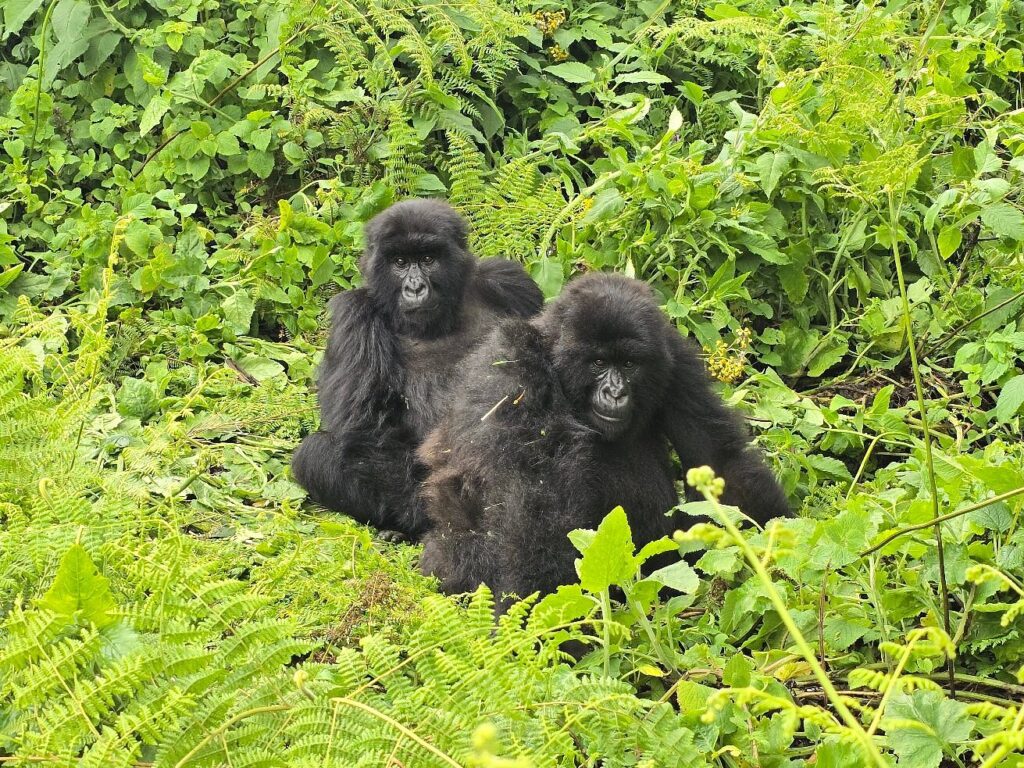
Understanding the Gorilla Safari Experience Rwanda and Uganda: What to Expect helps you choose the right country, prepare for the trek and design a realistic itinerary. Rwanda and Uganda both offer regulated mountain gorilla tracking, but the destinations differ in permit prices, access, terrain, accommodation and possible safari extensions.
A gorilla safari in Rwanda or Uganda is unlike an ordinary wildlife holiday. Instead of observing animals from a safari vehicle, you walk into a protected mountain forest with experienced trackers and park rangers. The objective is to find one of the habituated mountain gorilla families that conservation teams monitor and protect.
The experience combines physical adventure, wildlife observation, conservation and cultural discovery. You may walk for less than two hours or spend much of the day navigating forest trails. Rain, mud, slopes and thick vegetation can make the trek demanding. However, the moment you reach the gorillas often becomes the defining memory of the journey.
Rwanda’s gorilla treks take place in Volcanoes National Park, approximately two and a half to three hours from Kigali. Uganda offers gorilla tracking in Bwindi Impenetrable National Park and Mgahinga Gorilla National Park. Bwindi has several trekking sectors, while Mgahinga forms part of the wider Virunga conservation landscape.
This guide explains every major part of the journey. It covers permit costs, the trekking-day schedule, physical difficulty, park rules, photography, accommodation, transportation, packing, seasonal conditions and sample itineraries.
Gorilla Safari Experience Rwanda and Uganda: What to Expect at a Glance
A standard gorilla trekking day begins early. Visitors usually eat breakfast before traveling to the relevant park headquarters or sector briefing point.
After registration, park staff explain trekking rules and organize visitors into small groups. Each group is assigned to a habituated gorilla family and accompanied by professional ranger guides.
Trackers normally enter the forest earlier to locate the gorillas. They communicate with the ranger teams and help guide visitors toward the gorilla family’s approximate location. Mountain gorillas move naturally, so the walking time changes from one day to another.
Once the gorillas are located, visitors are normally allowed one regulated hour in their presence. The group then leaves the gorillas and walks back to the trailhead.
The complete experience generally includes:
- Early breakfast
- Transfer to the briefing point
- Registration
- Safety and conservation briefing
- Gorilla-family allocation
- Transfer or walk to the trailhead
- Guided forest trek
- One hour with the gorillas
- Return walk
- Transfer to the lodge
- Lunch and relaxation
Visitors must be at least 15 years old. Standard trekking groups are limited to eight visitors, and normal viewing time is limited to one hour. Rwanda’s official rules also require visitors to maintain the designated distance, keep voices low and avoid trekking when affected by a contagious illness. Rwanda Development Board gorilla rules
Uganda follows comparable guidelines. The Uganda Wildlife Authority states that normal gorilla tracking allows a maximum viewing period of one hour. Uganda Wildlife Authority tracking guidelines
Where Can You See Mountain Gorillas?
Wild mountain gorillas live in a restricted area of Central and East Africa. Tourism-based encounters take place within carefully managed protected areas.
For most international visitors, Rwanda and Uganda provide the most established options.
Volcanoes National Park in Rwanda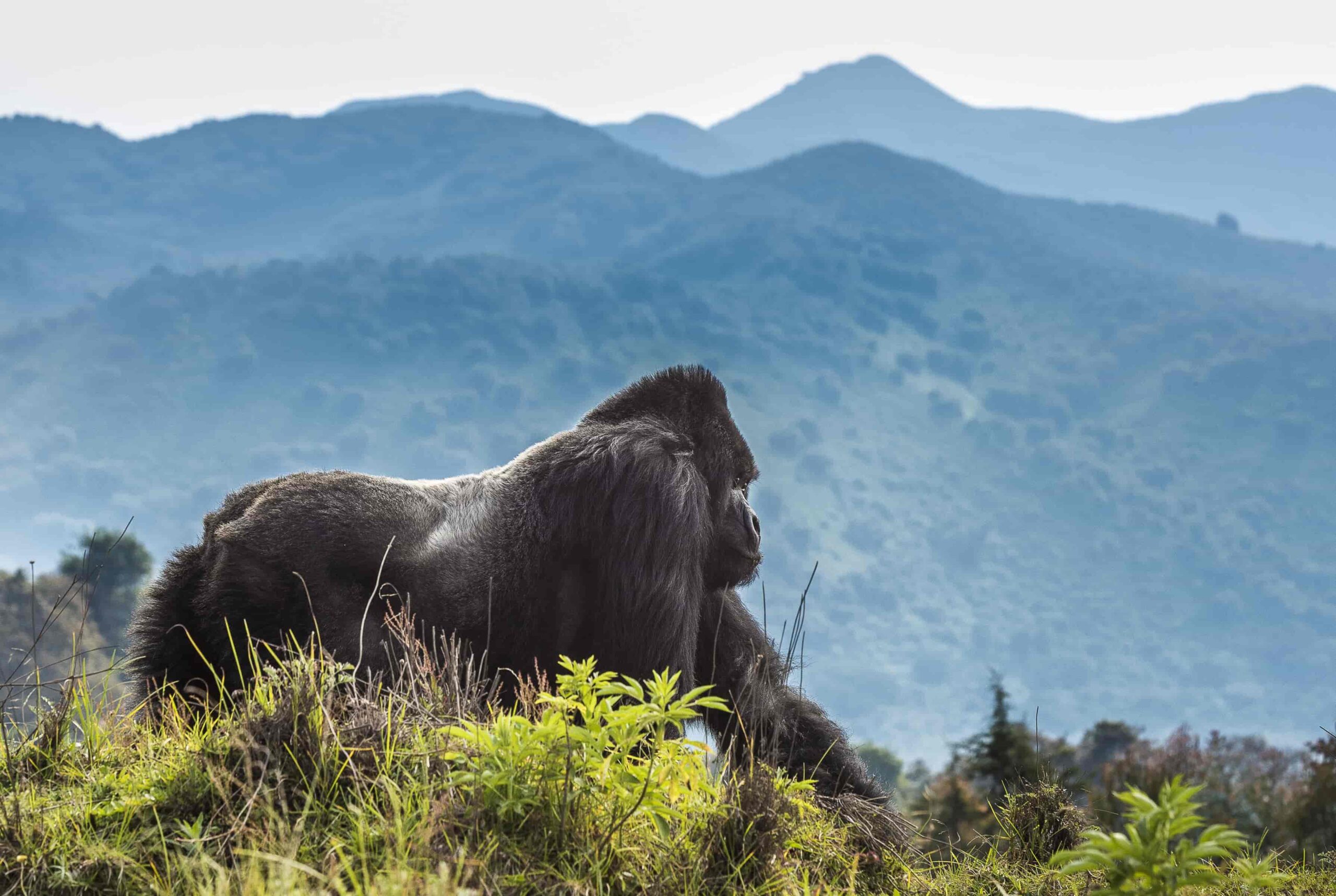
Volcanoes National Park is situated in northwestern Rwanda. It protects a section of the Virunga Mountains, a volcanic chain extending across Rwanda, Uganda and the Democratic Republic of the Congo.
The park is characterized by bamboo forest, montane vegetation, volcanic slopes and views of peaks such as Karisimbi, Bisoke, Sabyinyo, Gahinga and Muhabura.
Rwanda’s main gorilla trekking headquarters are at Kinigi. Visitors usually stay in Kinigi, Musanze or at one of the lodges positioned around the Volcanoes region.
Volcanoes National Park is attractive because it is relatively accessible from Kigali. This makes it possible to organize short two- or three-day gorilla safaris without requiring domestic flights.
The region also offers:
- Golden monkey tracking
- Dian Fossey tomb hike
- Mount Bisoke hike
- Ellen DeGeneres Campus of the Dian Fossey Gorilla Fund
- Twin Lakes excursions
- Cultural experiences
- Nature walks
- Volcano hiking
- Birdwatching
Bwindi Impenetrable National Park in Uganda
Bwindi Impenetrable National Park lies in southwestern Uganda. Its ancient forest covers steep ridges and valleys and supports mountain gorillas, forest birds, primates and rich plant life.
Bwindi is divided into four principal gorilla trekking sectors:
- Buhoma
- Ruhija
- Rushaga
- Nkuringo
The sector matters because it determines where you report for the trek. A lodge near Buhoma may be several hours from a permit issued for Rushaga or Nkuringo.
Travelers should therefore select accommodation only after confirming the trekking sector.
Each sector has a different atmosphere. Buhoma is the longest-established tourism area and has a broad selection of lodges. Ruhija sits at a higher elevation and is known for forest scenery and birdlife. Rushaga and Nkuringo are convenient for some Kigali-based itineraries and offer striking views of southwestern Uganda.
The Uganda Wildlife Authority recommends appropriate 4×4 access for some routes because the roads around the southern sectors can be mountainous and unpaved. Uganda Wildlife Authority: Bwindi Impenetrable National Park
Mgahinga Gorilla National Park in Uganda
Mgahinga is Uganda’s section of the Virunga conservation landscape. It is located near Kisoro and the borders with Rwanda and the Democratic Republic of the Congo.
The park offers:
- Mountain gorilla tracking
- Golden monkey tracking
- Volcano hiking
- Birdwatching
- Nature walks
- Cultural experiences
Mgahinga is smaller than Bwindi and generally has fewer available gorilla permits. However, its volcanic scenery makes it an excellent destination when permits and accommodation align.
It can be reached relatively conveniently from Kigali through the Rwanda–Uganda border, subject to current immigration and border requirements.
Rwanda or Uganda: Which Gorilla Safari Is Better?
There is no universal answer. Both countries offer properly regulated encounters with wild mountain gorillas.
The best destination depends on budget, available time, desired accommodation, international flights and other wildlife interests.
Choose Rwanda if you want:
- Shorter road access from Kigali
- A two- or three-day gorilla safari
- High-end and ultra-luxury lodges
- Convenient pre- or post-conference travel
- Gorilla trekking combined with golden monkeys
- Akagera National Park as a Big Five extension
- A compact itinerary with fewer long transfers
Choose Uganda if you want:
- A lower standard foreign non-resident permit price
- More accommodation across different price levels
- A longer overland adventure
- Several gorilla trekking sectors
- Queen Elizabeth National Park
- Kibale chimpanzee tracking
- Lake Bunyonyi
- Murchison Falls National Park
- A broader wildlife circuit
Choose both countries if you want:
- Two gorilla treks in different environments
- Rwanda’s Volcanoes National Park and Uganda’s Bwindi or Mgahinga
- Golden monkeys and mountain gorillas
- A cross-border East African adventure
- Kigali as the arrival point and Entebbe as the departure point
- A deeper understanding of regional gorilla conservation
Gorilla Safari Experience Rwanda and Uganda: What to Expect Before Booking
The planning process begins with permits. Gorilla permits are issued for a particular country, park or sector and travel date.
You should check permit availability before purchasing restrictive international flights or confirming non-refundable accommodation.
Rwanda gorilla permit price
The standard Rwanda gorilla permit for an international visitor costs USD 1,500 per person for one trek.
The permit covers the scheduled trek with park ranger support and the regulated viewing period. It does not automatically include transportation, accommodation, meals, porters, tips or travel insurance.
The Rwanda Development Board currently publishes the following categories:
| Visitor category | Published permit price |
|---|---|
| International visitor | USD 1,500 |
| Foreign resident in Rwanda | USD 500, subject to conditions |
| African citizen or qualifying African resident | USD 500, subject to conditions |
| Rwandan or East African citizen | USD 200, subject to conditions |
Visitor categories require appropriate documentation. Current eligibility and promotional restrictions should be checked through the official booking system.
Uganda gorilla permit price
Uganda’s standard gorilla permit for a foreign non-resident is USD 800 per person under the current tariff.
Uganda also applies separate categories for foreign residents and East African citizens. The tour operator should confirm the correct rate according to the traveler’s nationality and residency status.
The permit is assigned to a particular trekking date and usually to a specific national park or Bwindi sector.
Why permit details matter
A gorilla permit is not simply an entry ticket that can be used anywhere.
Before payment, confirm:
- Country
- National park
- Bwindi sector, when relevant
- Trekking date
- Traveler’s legal name
- Passport number
- Nationality
- Date of birth
- Applicable visitor category
Incorrect information can create serious problems during check-in.
Can permits be changed?
Permit rescheduling, cancellation and transfer conditions are controlled by the responsible authority. Rules can differ between Rwanda and Uganda and may be revised.
Do not assume a permit can be changed without cost. Ask for the written terms before paying.
Travel insurance should cover the non-refundable value of the journey according to the insurer’s policy conditions.
What Happens the Day Before Gorilla Trekking?
The day before the trek should be simple and well paced.
Visitors generally arrive at the lodge during the afternoon, check in and receive information from the guide or lodge staff.
Confirm your equipment
Check that you have:
- Hiking boots
- Long trousers
- Long-sleeved shirt
- Rain jacket
- Gloves
- Gaiters
- Daypack
- Water
- Camera
- Charged batteries
- Personal medication
Some luxury lodges provide gaiters, backpacks, gloves or walking sticks. Confirm what is available rather than relying on assumptions.
Prepare your daypack
Keep the pack light. A typical daypack contains:
- Water
- Packed snack or lunch
- Rain protection
- Camera
- Spare battery
- Lens cloth
- Sun protection
- Insect repellent
- Medication
- Passport copy if requested
- Small amount of cash for a porter or tips
A porter can carry the pack during the trek.
Eat and rest
Gorilla trekking mornings begin early. Eat a balanced dinner, drink enough water and go to bed at a reasonable time.
Avoid scheduling a late celebration or lengthy evening activity before the trek. Your forest experience will be more enjoyable when you are rested.
Discuss mobility concerns
Tell your guide about knee, back, breathing, balance or stamina concerns before reaching the briefing point.
Park staff may consider fitness when allocating trekking groups, although an easy route cannot be guaranteed.
Gorilla Safari Experience Rwanda and Uganda: What to Expect on Trekking Morning
The exact schedule depends on the country, park, lodge and assigned sector. However, most mornings follow a similar pattern.
Early breakfast
Breakfast may begin between 5:00 and 6:30 a.m. Lodges accustomed to gorilla trekkers normally prepare early meals and packed lunches.
Eat enough to support several hours of walking. There may not be another full meal until you return.
Transfer to the briefing point
Your driver-guide takes you to the appropriate park headquarters or sector office.
In Rwanda, visitors generally report to the Volcanoes National Park headquarters in Kinigi.
In Bwindi, visitors report to the office corresponding to their permit sector. Arriving at the wrong sector can mean missing the trek, which is why lodge selection and transport planning are crucial.
Registration
Park staff confirm permits and may inspect identification. Traveler names should match the official booking details.
Cultural welcome
Some locations include a short performance or community welcome before the formal briefing. This varies by park and day.
Ranger briefing
The ranger team explains:
- How to behave in the forest
- The required distance from gorillas
- Health restrictions
- Photography rules
- What to do if gorillas approach
- Why food should remain packed
- How to keep voices low
- Group movement
- Waste management
- Emergency procedures
Listen carefully even if you have trekked gorillas before. Instructions can change and each ranger team may address current forest conditions.
Group allocation
Visitors are divided into trekking groups and assigned to habituated gorilla families.
Allocation may consider:
- Fitness
- Age
- Mobility
- Group relationships
- Permit details
- Gorilla locations
- Operational needs
Travel companions should tell the guide if they want to remain together. Final allocation remains under park authority control.
Meeting the porters
Porters are usually available near the briefing area. Hiring one is strongly recommended.
A porter carries your daypack and can help you maintain balance on slippery or steep sections. Porter services also provide direct employment to people living around the parks.
How Difficult Is Gorilla Trekking?
Gorilla trekking difficulty cannot be predicted precisely.
One visitor may reach the gorillas after a manageable walk through bamboo. Another may spend several hours crossing wet, steep forest terrain.
The difficulty depends on:
- Current gorilla location
- Gorilla movement
- Rain
- Mud
- Altitude
- Vegetation
- Trail condition
- Trekking sector
- Personal fitness
- Walking pace
Rwanda trekking conditions
Volcanoes National Park includes farmland approaches, bamboo forest and volcanic mountain slopes. The terrain can be muddy and steep, particularly after rain.
Some travelers find Rwanda’s access comparatively straightforward because the park is close to Kigali and the tourism infrastructure is well developed. This does not mean every Rwanda trek is easy.
Bwindi trekking conditions
Bwindi’s name reflects its dense forest character. Trails may cross steep ridges, valleys, roots and thick vegetation.
Conditions differ among Buhoma, Ruhija, Rushaga and Nkuringo. No sector guarantees an easy trek.
Mgahinga trekking conditions
Mgahinga combines bamboo, montane forest and volcanic terrain. The scenery can be magnificent, but elevation and slopes may challenge some visitors.
How fit should you be?
You do not need to be a competitive athlete. However, you should be reasonably comfortable walking for several hours over uneven terrain.
Preparation can include:
- Regular walking
- Hill walking
- Stair climbing
- Using hiking boots before the trip
- Practicing with a light daypack
- Improving general stamina
Travelers with medical concerns should consult an appropriate healthcare professional before booking strenuous activities.
What Is It Like When You Find the Gorillas?
The ranger may ask the group to leave walking sticks and larger bags with the porters before moving closer. Cameras and essential personal items can normally be carried, subject to ranger instructions.
The atmosphere often becomes quieter as the group approaches.
You may first notice: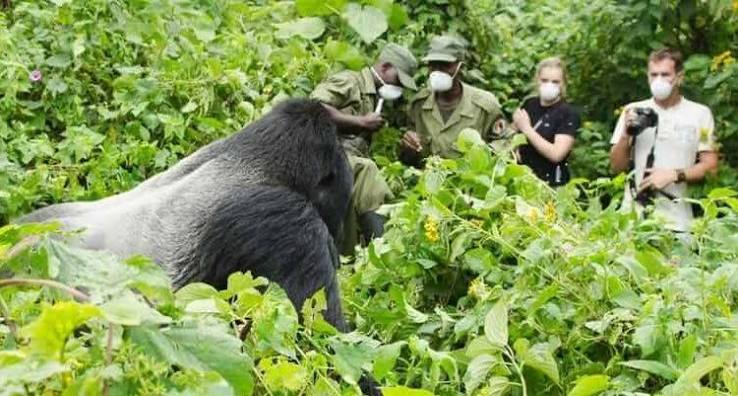
- Moving vegetation
- A dark shape through the leaves
- Sounds of branches
- Young gorillas playing
- Adults feeding
- A silverback resting
- A mother carrying or watching an infant
Every encounter is different. The gorillas may be active, feeding, grooming or resting. Forest vegetation may offer a clear view or partially hide some individuals.
The objective is not to surround the animals or pursue a perfect photograph. Visitors must follow the ranger’s direction and allow the gorillas to control the encounter.
The one-hour viewing period
The standard viewing period begins when the gorillas are located and the ranger team determines that the visit has started.
One hour may sound short, but it allows visitors to observe several forms of natural behavior while limiting pressure on the animals.
Use part of the time to watch without looking through a camera.
If a gorilla approaches
Gorillas do not understand the human distance rule. A curious young animal or passing adult may move closer.
Remain calm and follow the ranger’s instructions. Do not reach toward the gorilla, block its path or move suddenly.
The ranger team understands the gorillas’ behavior and will direct the group.
Can gorillas charge?
Gorillas sometimes communicate through displays, movement and sound. These behaviors do not automatically indicate an attack.
Visitors should never attempt to interpret or respond independently. Stay composed, avoid sudden movement and follow the ranger.
Habituated gorillas are accustomed to controlled human visits, but they remain wild animals.
Gorilla Trekking Rules and Responsible Behavior
Rules protect visitors and gorillas.
Mountain gorillas are vulnerable to diseases carried by humans. This is why illness restrictions are taken seriously.
Essential rules
Visitors should:
- Follow ranger instructions
- Maintain the required distance whenever possible
- Keep voices low
- Avoid flash photography
- Never touch the gorillas
- Avoid eating near the gorillas
- Keep personal belongings controlled
- Remain with the trekking group
- Avoid littering
- Follow health instructions
- Turn away and cover the face when coughing or sneezing
- Respect the one-hour limit
The RDB states that visitors affected by a cold, flu or another contagious illness may be denied access to the park. It also limits standard groups to eight people and viewing to one hour. Official Rwanda gorilla tracking requirements
Why the rules matter
Gorillas share biological similarities with humans and can be vulnerable to respiratory infections. Keeping distance and avoiding a trek when unwell are conservation responsibilities.
The rules also prevent the animals from becoming too accustomed to uncontrolled human interaction.
Gorilla Safari Experience Rwanda and Uganda: What to Expect from Photography
Gorilla photography is rewarding but technically challenging.
Forest light can be limited, vegetation can obstruct views and the animals may move between bright and shaded areas.
Camera equipment
Useful equipment includes:
- Mirrorless or DSLR camera
- Mid-range zoom lens
- Fast lens when available
- Spare batteries
- Extra memory cards
- Lens cloth
- Waterproof cover
- Comfortable strap
A very long telephoto lens is not always necessary because encounters may occur at relatively close regulated distances. A flexible zoom can be more practical in dense forest.
Smartphone photography
Modern phones can produce excellent photographs and videos. However, low forest light and distance may affect image quality.
Protect the phone from rain and mud. Keep it attached securely rather than holding it carelessly on steep terrain.
Flash photography
Flash should not be used. Turn it off before approaching the gorillas.
Automatic camera settings may activate flash unexpectedly, so check the settings in advance.
Photography etiquette
Do not:
- Push ahead of other group members
- Block another visitor’s view
- move away from the ranger
- use unauthorized equipment
- make sounds to attract attention
- encourage the gorillas to look toward the camera
Take turns when viewpoints are limited.
Photographing instead of watching
It is easy to spend the entire hour looking at a screen. Set aside part of the encounter to watch the gorillas directly.
The experience is about observing natural behavior, not simply collecting images.
What Should You Wear for Gorilla Trekking?
Clothing should protect you from rain, vegetation, insects, mud and changing temperatures.
Hiking boots
Wear waterproof hiking boots with reliable grip and ankle support.
New boots can cause discomfort, so use them before the safari.
Long trousers
Long trousers protect your legs from vegetation and insects. Lightweight trekking fabric dries more quickly than heavy cotton.
Tuck the trousers into socks or gaiters if advised.
Long-sleeved shirt
A breathable long-sleeved shirt provides protection while remaining comfortable in humid conditions.
Rain jacket
Rain can occur throughout the year. Carry a lightweight waterproof jacket or poncho even when the morning looks clear.
Gloves
Gardening-style gloves help protect your hands when using vegetation for balance. They are more practical than heavy winter gloves.
Gaiters
Gaiters reduce the amount of mud, water and forest debris entering your boots. Some lodges provide them.
Hat and sun protection
Open sections near the park boundary may be sunny. Carry a hat and suitable sun protection.
Colors
Neutral colors such as green, brown, grey and beige are practical. Avoid clothing that is delicate or difficult to wash.
What to Pack for a Rwanda and Uganda Gorilla Safari
A complete packing list should cover trekking, lodge time, road travel and other national parks.
Essential trekking items
- Waterproof boots
- Long trousers
- Long-sleeved shirt
- Rain jacket
- Gloves
- Gaiters
- Daypack
- Refillable water bottle
- Insect repellent
- Sun protection
- Camera
- Spare battery
- Memory cards
- Personal medication
General safari clothing
- Lightweight shirts
- Comfortable trousers
- Warm layer
- Casual lodge clothing
- Sleepwear
- Underwear
- Socks
- Comfortable shoes
- Swimsuit when relevant
Highland mornings and evenings can feel cool. Pack a fleece, sweater or light insulated layer.
Documents
Carry:
- Passport
- Visa documentation
- Travel insurance
- Flight information
- Tour operator contact
- Vaccination documentation when required
- Permit confirmation when supplied
- Emergency contact details
Luggage
Soft-sided luggage is useful for safari vehicles and regional flights.
Domestic flights may impose strict weight restrictions. Check limits before leaving home.
Best Time for Gorilla Trekking in Rwanda and Uganda
Gorilla trekking operates throughout the year.
The best period depends on your tolerance for rain, desired extensions, budget and accommodation availability.
June to September
This is the longer dry season in much of the region. It is one of the most popular periods for gorilla trekking.
Possible advantages include:
- Less rain
- Drier trails
- Good conditions for wider safaris
- Easier combination with Kenya or Tanzania
Possible disadvantages include:
- Higher demand
- Limited permit availability
- Higher lodge prices
- More visitors
Rain remains possible in mountain forests.
December to February
This is another relatively dry period and works well for primate trekking and general travel.
Christmas and New Year can be particularly busy.
March to May
These months usually receive more rain.
Advantages may include:
- Green scenery
- Lower lodge rates
- Better room availability
- Fewer visitors
- Dramatic photography
Challenges may include:
- Muddy trails
- Heavier rain
- Slower road travel
- More demanding trekking
October and November
These months can also be wet, although weather patterns vary.
Pack properly rather than relying on seasonal guarantees.
Gorilla Safari Experience Rwanda and Uganda: What to Expect from Accommodation
Both countries provide budget, midrange, luxury and ultra-luxury options.
The lodge should be selected according to location, itinerary and preferred comfort.
Accommodation near Volcanoes National Park
Rwanda offers some of Africa’s most exclusive gorilla lodges.
High-end properties include:
- Singita Kwitonda Lodge
- Wilderness Bisate
- Wilderness Bisate Reserve
- One&Only Gorilla’s Nest
Premium and midrange choices may include:
- Five Volcanoes Boutique Hotel
- Ingagi Park View Lodge
- Amakoro Songa Lodge
- Tiloreza Eco Lodge
- Le Bambou Gorilla Lodge
- Mountain Gorilla View Lodge
When comparing lodges, consider:
- Distance from Kinigi
- Room category
- Heating
- Meal plan
- Drinks
- Laundry
- Trekking equipment
- Spa
- Views
- Family accommodation
- Included activities
Accommodation in Bwindi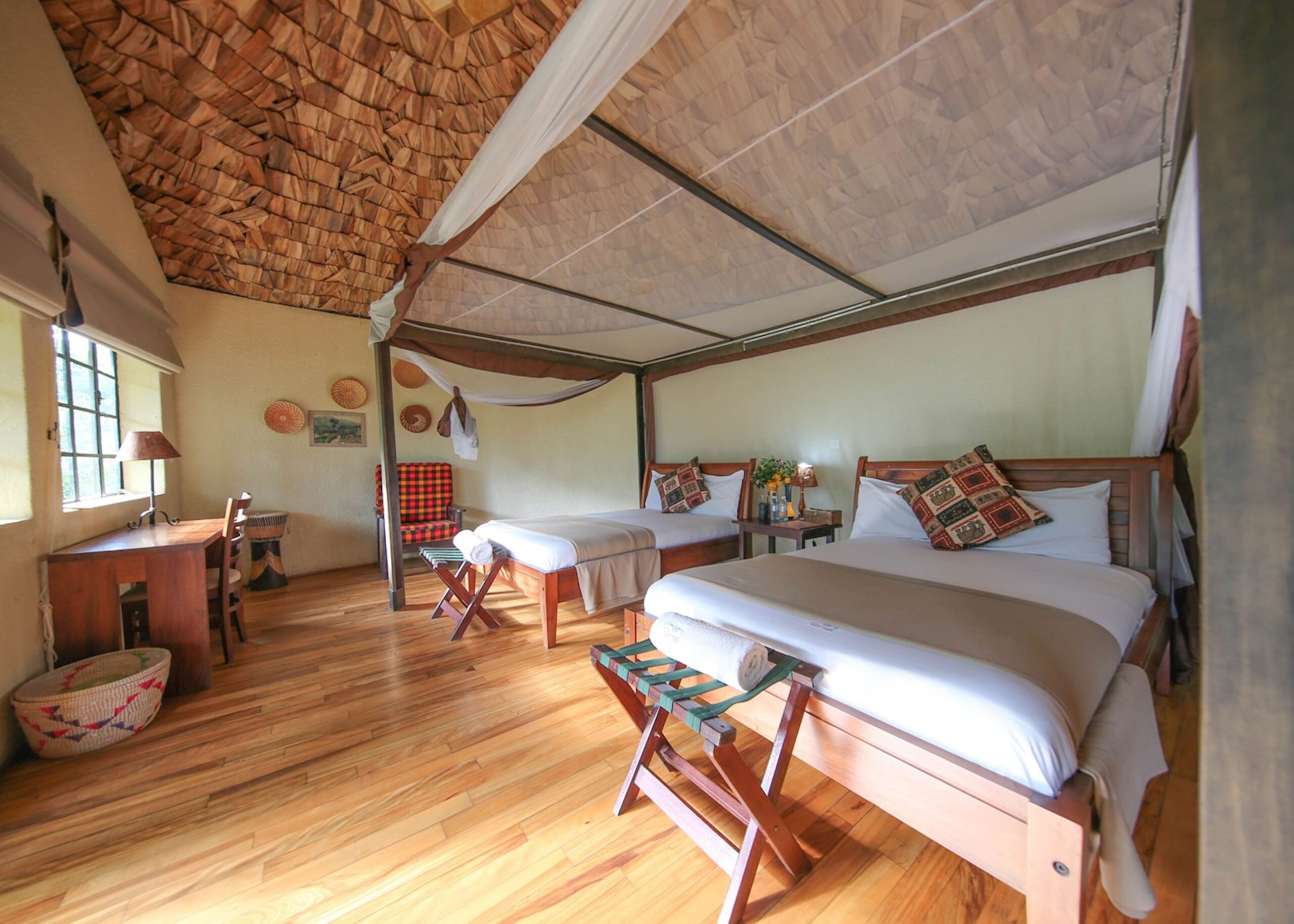
Bwindi has lodges in each trekking sector.
Accommodation should match the permit location.
Properties range from community guesthouses and comfortable forest lodges to high-end camps. Depending on the sector, travelers may consider properties around Buhoma, Ruhija, Rushaga or Nkuringo.
Ask the operator to confirm:
- Transfer time to briefing
- Road condition
- Room category
- Meal plan
- Electricity
- Charging facilities
- Hot water
- Laundry
- Wi-Fi
- Porter and equipment arrangements
Accommodation near Mgahinga
Kisoro and the area near Mgahinga offer several accommodation levels. Luxury choices are more limited than around Rwanda’s Volcanoes National Park, but distinctive high-end and boutique properties are available.
Mgahinga accommodation can also work for golden monkey tracking and volcano hikes.
Meals at gorilla lodges
Most remote lodges are booked on full board, including breakfast, lunch and dinner.
A trekking day may include:
- Early breakfast
- Packed snack or lunch
- Post-trek lunch
- Afternoon refreshments
- Dinner
Inform the operator about allergies and dietary requirements before arrival.
Premium wines, champagne, beer, liquor and spirits may be excluded even at luxury lodges. Check the beverage policy.
How Much Does a Gorilla Safari Cost?
The permit is the largest fixed cost, but the complete package also includes transportation, accommodation and guiding.
Rwanda gorilla safari prices
Estimated per-person prices:
| Rwanda package | Estimated price |
|---|---|
| One-day trek from Kigali | USD 1,800–2,100 |
| Two-day budget or midrange safari | USD 2,050–3,000 |
| Three-day midrange safari | USD 2,500–4,000 |
| Three-day luxury safari | USD 4,000–8,000+ |
| Ultra-luxury experience | USD 7,000–15,000+ |
Uganda gorilla safari prices
Estimated per-person prices:
| Uganda package | Estimated price |
|---|---|
| Two-day safari from Kigali | USD 1,300–2,000 |
| Three-day Bwindi safari | USD 1,500–2,700 |
| Four-day gorilla and Lake Bunyonyi | USD 1,900–3,500 |
| Luxury Bwindi safari | USD 3,500–7,000+ |
Rwanda and Uganda combination prices
A two-country itinerary with one trek in each country requires two permits.
Estimated prices include:
| Combined package | Estimated price per person |
|---|---|
| Five-day double gorilla safari | USD 3,500–5,500 |
| Seven-day primate safari | USD 4,200–7,500 |
| Ten-day wildlife and primate safari | USD 5,500–12,000+ |
Prices vary by group size, hotel level and route.
Transport and Travel Times
Road travel is a major part of a gorilla safari.
Kigali to Volcanoes National Park
The journey usually takes approximately two and a half to three hours, depending on traffic, stops and lodge location.
This accessibility makes Rwanda suitable for short gorilla trips.
Kigali to Bwindi
Travel time depends on the border and confirmed Bwindi sector.
Southern sectors such as Rushaga and Nkuringo can often be reached more efficiently from Kigali than from Entebbe. Border procedures and road conditions affect the schedule.
Entebbe to Bwindi
The overland journey is long and usually occupies most of a day. Travelers can break the trip with other destinations or use a scheduled domestic flight followed by a road transfer.
Kigali to Mgahinga
Mgahinga can be reached through a Rwanda–Uganda border crossing. The exact journey depends on border procedures and lodge location.
Safari vehicles
A suitable vehicle should provide:
- Comfortable seating
- Seatbelts
- Luggage space
- Reliable maintenance
- Experienced driver-guide
- Drinking water
- Charging where available
A 4×4 is particularly valuable on mountain roads and unpaved lodge approaches.
Crossing Between Rwanda and Uganda
A two-country safari requires appropriate immigration documents.
Requirements vary according to nationality and can change.
Before travel, confirm:
- Passport validity
- Rwanda visa rules
- Uganda visa rules
- East Africa Tourist Visa eligibility
- Yellow fever requirements
- Re-entry conditions
- Border operating arrangements
- Rules for minors, where relevant
Use official immigration and health sources. Do not rely solely on an old blog or social-media post.
Your tour operator can assist with logistical information, but each traveler is responsible for valid documents.
Gorilla Safari Health and Safety
Gorilla trekking is managed by trained park teams. However, it remains an outdoor activity in a wild forest.
Health restrictions
Do not trek when affected by a contagious illness. Human diseases can threaten gorillas.
Tell the guide if you become unwell before the activity.
Personal health preparation
Consult an appropriate travel-health professional about:
- Vaccinations
- Malaria prevention
- Personal medication
- Fitness concerns
- Altitude
- Allergies
- Travel insurance
Health recommendations vary by individual and travel route.
Insurance
Travel insurance should cover:
- Medical treatment
- Emergency evacuation
- Trip cancellation
- Trip interruption
- Delayed baggage
- Missed connections
- Non-refundable permits
- Safari activities, subject to policy terms
Read the exclusions carefully.
Forest safety
During the trek:
- Stay with the ranger
- Watch your footing
- Use a porter
- Drink water
- Communicate discomfort
- Avoid running
- Follow wildlife instructions
- Keep hands free where possible
Porters and Community Benefits
Hiring a porter is one of the most practical decisions a visitor can make.
Porters help by:
- Carrying a daypack
- Providing balance
- Assisting on slopes
- Helping at muddy sections
- Reducing fatigue
Porter employment also provides direct income to communities around gorilla parks.
Tourism can support conservation when local residents receive meaningful benefits through jobs, revenue sharing, guiding, hospitality, crafts and responsible community partnerships.
Gorilla Conservation and Responsible Tourism
Mountain gorilla populations have benefited from sustained conservation efforts, ranger protection, veterinary support, research and carefully managed tourism.
Permit revenue supports protected-area management and wider conservation systems. Tourism also creates an economic reason to protect forests and wildlife.
However, gorillas continue to face challenges, including:
- Restricted habitat
- Human population pressure
- Disease transmission
- Climate change
- Illegal activities
- Human-wildlife conflict
Responsible travelers should:
- Follow every ranger rule
- Never trek when ill
- Maintain distance
- Avoid litter
- Hire local services
- Respect communities
- Choose responsible operators
- Avoid exploitative encounters
- Support credible conservation programs
A gorilla safari should not be treated as a staged animal attraction. It is a carefully managed visit to the habitat of a wild and protected species.
Gorilla Safari Experience Rwanda and Uganda: What to Expect on a Two-Country Tour
A combined trip provides the opportunity to compare two landscapes and tourism systems.
Rwanda’s Volcanoes National Park generally offers shorter access from an international airport and a concentrated selection of premium lodges.
Uganda’s Bwindi provides a broader range of sectors, forest environments and accommodation prices. Uganda also connects naturally with Queen Elizabeth National Park and Kibale.
Border travel
The itinerary must allow time for:
- Immigration
- Vehicle procedures
- Passport checks
- Road conditions
- Meal stops
- Luggage handling
Do not schedule an inflexible flight immediately after a long cross-border transfer.
Two gorilla permits
A combined journey requires:
- Rwanda permit: USD 1,500 for a standard international visitor
- Uganda permit: USD 800 for a standard foreign non-resident
The two permits total USD 2,300 per person before accommodation and transport.
Comparing the treks
The two experiences may differ in:
- Terrain
- Vegetation
- Gorilla family
- Weather
- Trekking duration
- Lodge atmosphere
- Photography
- Ranger interpretation
The objective should not be to decide which country has “better” gorillas. The animals are part of connected populations and protected landscapes. The value lies in experiencing two environments.
Sample 3-Day Rwanda Gorilla Safari
Day 1: Kigali to Volcanoes National Park
Meet your guide in Kigali. Depending on arrival time, visit the Kigali Genocide Memorial or another selected city attraction.
Travel to Volcanoes National Park and check into the lodge.
Receive a trekking briefing and prepare equipment.
Day 2: Gorilla trekking
Eat an early breakfast and transfer to Kinigi.
Complete registration, briefing and group allocation. Trek into the forest and spend the regulated hour with the assigned gorilla family.
Return to the lodge for lunch and relaxation.
Day 3: Return to Kigali
Visit the Ellen DeGeneres Campus, Twin Lakes or a suitable cultural experience.
Continue to Kigali for departure.
Sample 3-Day Uganda Gorilla Safari from Kigali
Day 1: Kigali to Bwindi
Meet your guide and travel toward the Rwanda–Uganda border.
Complete immigration and continue to the lodge near the confirmed Bwindi sector.
Day 2: Gorilla trekking
Transfer to the correct sector briefing point.
After the trek, return to the lodge. Keep the afternoon free.
Day 3: Return to Kigali
Travel back through the border and continue to Kigali.
Allow adequate time before an international flight.
Sample 5-Day Rwanda and Uganda Gorilla Safari
Day 1: Kigali to Volcanoes National Park
Begin with a Kigali pickup and transfer to northern Rwanda.
Day 2: Rwanda gorilla trekking
Trek gorillas in Volcanoes National Park and relax at the lodge.
Day 3: Golden monkeys and Uganda transfer
Track golden monkeys in the morning or visit a conservation center.
Continue to Uganda and check into a lodge near Bwindi or Mgahinga.
Day 4: Uganda gorilla trekking
Complete the second gorilla trek.
Day 5: Return to Kigali
Cross back into Rwanda and transfer to Kigali.
A six-day itinerary provides a more relaxed pace.
Sample 7-Day Uganda Primate Safari
Day 1: Entebbe arrival
Transfer to an Entebbe or Kampala hotel.
Day 2: Travel to Kibale
Drive west toward Kibale National Park.
Day 3: Chimpanzee tracking
Track chimpanzees and complete an optional community or wetland experience.
Day 4: Queen Elizabeth National Park
Travel to Queen Elizabeth National Park and take a game drive.
Day 5: Queen Elizabeth to Bwindi
Complete a morning activity and continue to Bwindi.
Day 6: Gorilla trekking
Trek gorillas and return to the lodge.
Day 7: Departure
Travel to Kigali or begin the return to Entebbe.
An eight-day version reduces transfer pressure.
Sample 10-Day Rwanda and Uganda Safari
A complete itinerary can include:
- Kigali
- Volcanoes National Park
- Bwindi or Mgahinga
- Queen Elizabeth National Park
- Kibale National Park
- Entebbe
Main experiences may include:
- Rwanda gorilla trekking
- Golden monkey tracking
- Uganda gorilla trekking
- Game drives
- Kazinga Channel boat safari
- Chimpanzee tracking
- Cultural visits
This route combines primates with classic African wildlife.
Adding Golden Monkey Tracking
Golden monkeys live in the Virunga region and can be tracked in Rwanda and Uganda.
The Rwanda Development Board currently publishes an international visitor price of USD 100 for golden monkey tracking. The minimum age is 12. RDB golden monkey permit information
Golden monkeys are active and often move quickly through bamboo. Photography can be challenging but rewarding.
The trek works well on the day after gorilla tracking.
Adding Chimpanzee Tracking
Uganda’s Kibale National Park is a leading chimpanzee destination. Guided tracking walks begin at scheduled times, and standard sightings allow a regulated period with the chimpanzees after they are located.
Chimpanzees generally move more quickly than gorillas and may spend time in the canopy. The experience can feel more energetic.
Rwanda also offers chimpanzee tracking in Nyungwe National Park. Adding Nyungwe creates a longer Rwanda primate itinerary.
Adding a Wildlife Safari
Akagera National Park
Akagera is Rwanda’s Big Five destination. A gorilla and Akagera trip can include:
- Game drives
- Lions
- Rhinos
- Elephants
- Buffaloes
- Leopards
- Giraffes
- Zebras
- Lake Ihema boat safari
Allow at least two nights for a comfortable Akagera experience.
Queen Elizabeth National Park
Queen Elizabeth National Park combines naturally with Bwindi and Kibale.
Experiences include:
- Game drives
- Kazinga Channel boat safari
- Savannah wildlife
- Birdwatching
- Ishasha region
The direct drive from Kampala is long, but the park fits naturally into a western Uganda circuit. Uganda Wildlife Authority: Queen Elizabeth National Park
Murchison Falls National Park
Murchison Falls can be added to a longer Uganda itinerary. The park offers savannah wildlife, Nile scenery and the powerful falls.
A complete Uganda circuit including Murchison, Kibale, Queen Elizabeth and Bwindi normally requires at least 10 to 14 days.
Cultural Experiences Around the Gorilla Parks
A well-designed safari includes opportunities to learn about the people living around protected areas.
Possible experiences include:
- Traditional dance
- Craft demonstrations
- Community walks
- Cooking
- Coffee experiences
- Storytelling
- Conservation projects
- Cultural heritage programs
Choose programs that respect participants and provide clear community benefit.
Avoid treating communities as staged attractions. Ask before photographing people.
Solo, Couple, Family and Group Expectations
Solo travelers
A private solo safari offers flexibility but costs more because the vehicle and room are not shared.
Scheduled group departures can reduce the cost.
Couples
Couples commonly choose a private vehicle and double room. Honeymoon arrangements may include special dinners or lodge experiences.
Families
The minimum gorilla trekking age is 15. Families with younger children need alternative activities and appropriate supervision.
Confirm family rooms, connecting rooms and dietary requirements early.
Groups
Groups larger than eight will be divided among different gorilla families.
The group organizer should coordinate:
- Passport details
- Rooming list
- Payment deadlines
- Dietary needs
- Fitness information
- Flight details
- Emergency contacts
Common Gorilla Safari Mistakes
Booking flights before permits
Check permit availability before purchasing non-refundable flights.
Selecting the wrong Bwindi lodge
Match the accommodation to the permit sector.
Arriving on trekking morning
Stay near the park the night before. Road delays can cause missed registration.
Wearing new boots
Break in hiking footwear before travel.
Carrying too much
Use a light daypack and hire a porter.
Hiding an illness
Do not risk transmitting disease to gorillas. Report symptoms honestly.
Expecting a guaranteed easy trek
Gorillas move daily. No operator can promise a short route.
Planning a long transfer after trekking
Keep the afternoon free whenever possible.
Focusing only on photographs
Take time to watch the gorillas directly.
Choosing a tour only by price
Compare permits, lodge location, vehicle, meals, park fees and guide services.
Frequently Asked Questions
What is a gorilla safari?
A gorilla safari is a journey that includes a regulated trek to visit a habituated gorilla family in its natural habitat.
Where can I trek mountain gorillas in Rwanda?
Gorilla trekking in Rwanda takes place in Volcanoes National Park.
Where can I trek gorillas in Uganda?
Uganda offers mountain gorilla trekking in Bwindi Impenetrable National Park and Mgahinga Gorilla National Park.
How much is a Rwanda gorilla permit?
The standard international visitor permit currently costs USD 1,500 per person for one trek.
How much is a Uganda gorilla permit?
The standard foreign non-resident permit currently costs USD 800 per person for one trek.
What is the minimum age?
The minimum age is 15.
How many people are in a trekking group?
Standard groups are limited to a maximum of eight visitors per habituated gorilla family.
How long can visitors stay with the gorillas?
Normal gorilla tracking allows one regulated hour after the gorillas are located.
How long does the entire trek take?
It can take a few hours or most of the day. Gorilla movement, terrain and weather determine the duration.
Is gorilla trekking difficult?
It can be. Conditions may include steep slopes, mud, vegetation and altitude. Other treks may be relatively manageable.
Can an easy trek be guaranteed?
No. Park staff may consider fitness, but gorillas move naturally.
Do I need a porter?
A porter is optional but strongly recommended.
What happens if it rains?
The trek normally continues unless park authorities decide conditions are unsafe. Carry waterproof clothing and protect electronic equipment.
Can I use a camera?
Yes, subject to park rules. Flash photography is not permitted.
Can I use a drone?
Do not assume drones are allowed. Protected areas and border regions have strict aviation and wildlife rules. Only use equipment with proper authorization.
Can I touch a gorilla?
No. Visitors must not touch gorillas.
What happens if a gorilla comes close?
Remain calm and follow the ranger’s instructions.
Are sightings guaranteed?
Gorilla locations are monitored, and sightings are generally reliable. However, these are wild animals, so an ethical operator cannot guarantee a particular encounter or behavior.
Should I trek in Rwanda or Uganda?
Choose Rwanda for convenient access and premium accommodation. Choose Uganda for a lower permit price and longer wildlife circuits. Choose both for two contrasting experiences.
Can I trek twice?
Yes, subject to permit availability. Each trek requires a separate permit.
What should I wear?
Wear waterproof hiking boots, long trousers, a long-sleeved shirt, rain protection, gloves and gaiters.
When is the best time?
Trekking operates all year. June to September and December to February are popular drier periods, while wetter months offer green scenery and sometimes lower accommodation prices.
Can children trek?
Only travelers who meet the minimum age of 15 can participate.
Can older travelers trek?
Age alone does not determine ability. Discuss fitness and mobility with the operator, hire a porter and request current assistance options.
Are meals included?
Most remote lodges are booked on full board. Confirm the exact meal plan.
Are drinks included?
It depends on the lodge. Premium beverages are frequently excluded.
Is travel insurance necessary?
Comprehensive insurance is strongly recommended.
Can Rwanda and Uganda be combined?
Yes. Kigali is a convenient gateway for cross-border gorilla itineraries.
How early should I book?
Six to twelve months ahead is advisable, especially during popular travel periods.
Choosing a Gorilla Safari Operator
A professional operator coordinates permits, accommodation, transportation and timing.
Ask:
- Is the company legally registered?
- Is the permit included?
- What is the exact trekking date?
- Which park or Bwindi sector is confirmed?
- Which lodge and room category are included?
- Is the vehicle private?
- What meals are included?
- Are park fees included?
- What is excluded?
- What are the cancellation conditions?
- Who provides emergency assistance?
- Can dietary and mobility requirements be accommodated?
A clear proposal should provide a daily itinerary, price, inclusions, exclusions and payment terms.
Plan Your Gorilla Safari Experience Rwanda and Uganda
Understanding the Gorilla Safari Experience Rwanda and Uganda: What to Expect makes it easier to select the right country and prepare confidently.
Rwanda provides convenient access from Kigali, an excellent selection of high-end lodges and easy combinations with golden monkeys or Akagera National Park. Uganda offers lower standard permit prices, several gorilla trekking sectors and natural combinations with Kibale, Queen Elizabeth National Park and Lake Bunyonyi.
Neither experience should be reduced to permit price alone. Consider the complete route, lodge location, transportation, guide, fitness requirements and activities that matter most to you.
Universal Ventures Rwanda creates private and tailor-made gorilla safaris for couples, families, solo travelers and groups.
Available services include:
- Rwanda gorilla trekking packages
- Uganda gorilla safaris from Kigali
- Rwanda and Uganda double gorilla treks
- Gorilla permit coordination
- Golden monkey tracking
- Chimpanzee safaris
- Akagera Big Five tours
- Queen Elizabeth National Park extensions
- Lake Kivu and Lake Bunyonyi visits
- Private 4×4 transportation
- Professional driver-guides
- Budget, midrange and luxury lodges
- Airport and border transfers
- Customized East African itineraries
Contact Universal Ventures Rwanda
Universal Ventures Rwanda
Address: Kigali, Rwanda
Telephone/WhatsApp: +250 781 441 853
Email: info@universalventuresrwanda.com
Website: www.universalventuresrwanda.com
